
Why Sudan’s Civilians Risk Squandering Their Moment
Uniting on Minimum Common Ground Is the Only Safeguard Against Another Lost Transition Sudan’s war rages on, displacing millions and tearing the social fabric apart. Into this bleak landscape, the Quartet, the United States, Egypt, Saudi Arabia, and the United Arab Emirates, has introduced a…
Why Civilians Risk Squandering Sudan’s Moment?
Uniting on Minimum Common Ground Is the Only Safeguard Against Another Lost Transition
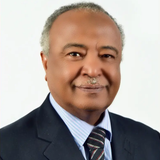
By Professor Mekki El ShiblyExecutive Director, Cognisance Centre for Strategic Studies
Sudan’s war rages on, displacing millions and tearing the social fabric apart. Into this bleak landscape, the Quartet, the United States, Egypt, Saudi Arabia, and the United Arab Emirates, has introduced a roadmap: first, a humanitarian truce, then a ceasefire, and finally, a civilian-led transition. The sequencing is logical. But instead of rallying behind this rare diplomatic opening, some factions of the divided Forces of Freedom and Change (FFC) have rushed to criticise the statement. Their concerns are not without merit. But the way forward is not to downgrade the roadmap; it is to seize it, refine it, and prepare to lead once the guns fall silent. Furthermore, at this critical moment, Sudan’s civilian actors must stop speaking in fragmented voices. Instead of issuing competing statements from every faction, they should rally behind a single umbrella body whose word carries more weight. This is not the time for uniting factions, it is the time for uniting major blocks.
The Complaint: No Implementation Mechanism
Critics say the Quartet statement lacks solid mechanisms for implementation. They are correct, but that is hardly fatal. No single communiqué can outline a comprehensive peace architecture. Implementation mechanism must come through consultations with actors beyond the Quartet, especially the United Nations, the African Union, and the European Union. These bodies provide legitimacy, technical capacity, and regional anchoring. The roadmap is an invitation to that next phase, not the final blueprint.
The Complaint: Civilians Were Excluded
Yes, the Quartet consulted the generals but not the civilians. But let’s be honest: the truce and ceasefire are matters for those holding weapons, not for those issuing statements. Bringing divided civilians into these early negotiations would only inject their unresolved quarrels into a fragile process, likely derailing it before it starts. Civilians will have their moment, and it will be decisive, once the guns are silenced. The responsibility of the armed factions is to stop shooting; the responsibility of the civilians is to unite first and be ready to govern.
The Complaint: Civilian Ownership Is Vague
Here, the critics touch on something real. Civilian ownership of the transition is indispensable. But ownership cannot be granted from abroad; it must be claimed from within. The Quartet cannot dictate who speaks for Sudanese civilians. That task belongs to the Sudanese themselves. If the FFC and other democratic actors continue to indulge in secondary disputes and factional maneuvering, they will squander the opening the roadmap provides. Worse, they risk repeating the failures of the Rotana process, when spoilers used division as their backdoor back into politics.
The Hard Truth
The Quartet has done what outsiders can: create space for peace by isolating the generals and sanctioning the Islamists who fuel this war. But no external actor can substitute for civilian unity. If the democratic forces cannot organise around broad minimum common denominators: ending the war, protecting civilians, and restarting a credible democratic transition, they will hand the future of Sudan back to the very spoilers they denounce.
The Way Forward
Civilians must recognise that sequencing matters. The truce and ceasefire will not involve them directly, but the day after, the spotlight will shift. If by then they remain fractured, Sudan risks falling into yet another cycle of military domination and Islamist resurgence. But if they are united, prepared with a credible civilian platform, and ready to work with the Quartet, the AU, IGAD, and the UN, then Sudan can begin to climb out of the abyss.
The criticisms of the Quartet statement are not without truth. But they miss the bigger picture: this roadmap is not the end, it is the beginning. The challenge for Sudanese civilians is not to nitpick its imperfections, but to unite and prepare themselves to lead once the opportunity arrives. The guns must first go silent. Then, and only then, will civilians have their moment. Whether they rise to it or squander it will determine Sudan’s fate.
melshibly@hotmail.com