
Sudan Between Structural Adjustment and Social Transformation
This paper acquires particular importance at a moment when Sudan’s public discourse is almost entirely consumed by the search for a ceasefire and the mechanics of silencing the guns. While that quest is urgent and indispensable, the sustainability of any peace will ultimately depend on the…
Cognisance Centre for Strategic Studies – London – Khartoum
Sudan Between Structural Adjustment and Social Transformation
A Political Economy Reading of Reform (1978–2025)
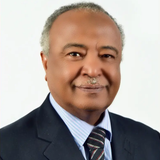
Professor Mekki Medani El Shibly
Executive Director, Cognisance Centre for Strategic Studies
Research Paper No. (1) / 2025
Sudan Between Structural Adjustment and Social Transformation
A Political Economy Reading of Reform (1978–2025)
Professor Mekki Medani El Shibly
Executive Director, Cognisance Centre for Strategic Studies
Table of Contents
Introductory Note 3
Executive Summary 5
Chapter 1: Nimeiri's Era and the IMF: The Rocky Start of an Unjust Economy (1978–1985) 7
Chapter 2: The Third Democratic Period (1986–1989) 11
Chapter 3: The National Salvation Regime (1989–2019) 15
Chapter 4: The Transitional Period (2019–2021) 21
Chapter 5: From the October 2021 Coup to the Outbreak of War (2023) 25
Chapter 6: The Post-War Context and Economic Roadmap 29
Chapter 7: The IMF’s New Strategy for Fragile and Conflict-Affected States (2022) 34
Chapter 8: Post-War Sudan: The Road Ahead and the Economic Recovery Framework 40
References 45
Sudan Between Structural Adjustment and Social Transformation:
A Political Economy Reading of Reform (1978-2025)
Introductory Note
This paper acquires particular importance at a moment when Sudan’s public discourse is almost entirely consumed by the search for a ceasefire and the mechanics of silencing the guns. While that quest is urgent and indispensable, the sustainability of any peace will ultimately depend on the country’s capacity to rebuild a viable civilian economy and a social state capable of delivering justice, livelihoods, and hope. It is within this broader horizon that the present study seeks to position itself — as an intellectual contribution to a parallel civilian dialogue that must accompany, and indeed guide, the military and political negotiations currently underway.
The analysis offered here demonstrates that Sudan’s economic choices in the coming transition cannot be reduced to simplistic slogans such as “self-reliance,” which ring hollow after the devastation inflicted by the April 2023 war. The very foundations of the national economy — its infrastructure, productive base, and administrative capacity — have been shattered. Under such circumstances, strategic re-engagement with international financial institutions, particularly the International Monetary Fund (IMF), becomes not an act of dependency, but one of rational self-interest and collective survival.
The paper therefore argues for a mature partnership with the IMF, building upon the progress achieved during the 2019–2021 transitional period, when Sudan successfully restored external confidence, unified its exchange rate, and entered the debt relief process under the HIPC Initiative. Crucially, this partnership can now unfold under a new and far more humane international framework: the IMF’s 2022 Strategy for Fragile and Conflict-Affected States (FCS). Unlike the rigid structural adjustment programmes of the past, this new strategy explicitly acknowledges the complexities of post-conflict societies, places social protection and institutional rebuilding at its core, and allows for gradual, nationally owned reform.
In this light, the significance of this paper extends well beyond economic analysis. It seeks to provide an intellectual and policy foundation for a civilian-led reconstruction dialogue, one that redefines Sudan’s relationship with global institutions from a position of sovereign partnership rather than isolation or submission. The central message is clear:
Sudan’s path to recovery will not emerge from the battlefield, but from a new social and economic covenant—one that integrates fiscal realism with social justice, and that transforms international cooperation into a tool for national renewal rather than control.
Executive Summary
This paper examines Sudan’s long and complex experience with structural adjustment programmes from the late 1970s to the outbreak of war in 2023, as a mirror of the dialectical interaction between economics and politics in a country weighed down by structural crises and repeated institutional transformations.
Since its first engagement with the International Monetary Fund (IMF) in 1978 under President Jaafar Nimeiri, Sudan has lived in constant tension between the external demands of financial stabilisation and the internal imperatives of social justice.
The study shows that Sudan was among the first African countries to implement IMF-sponsored adjustment programmes, but the results oscillated between partial success and outright failure — between phases of reform and contraction, openness and isolation. While such programmes re-integrated Sudan into global financial circuits, they also widened social inequality and weakened the middle class, particularly when applied without social protection or civic legitimacy.
The paper adopts a historical-analytical methodology, covering the main political regimes in nine main chapters: beginning with the Nimeiri era (1978–1985); the Third Democracy (1986–1989); the National Salvation regime (1989–2019); the Transitional Civilian Government (2019–2021); the war of April 2023; and ending with forward-looking analysis and an economic roadmap for reconstruction and civilian transition.
It argues that the failure of most adjustment experiences in Sudan stemmed not merely from technical design flaws, but from the absence of political legitimacy and social consensus that could render reform both feasible and sustainable. Military regimes treated adjustment as a tool of political survival, whereas civilian governments viewed it as a gamble for external support — rarely building a genuine productive base.
The paper further notes a paradigm shift in the IMF’s own philosophy through its 2022 Strategy for Fragile and Conflict-Affected States (FCS), which offers Sudan an opportunity to recalibrate its path along a more flexible, humane, and participatory model that links fiscal reform with institutional rebuilding and social protection.
Accordingly, it proposes five guiding principles for Sudan’s post-war economic roadmap:
- Civilian legitimacy as the essential foundation of economic stability;
- Transition to a productive economy centred on agriculture, industry, and services;
- Social justice as the framework for fiscal policy;
- Balanced partnership with international institutions, avoiding both dependency and isolation;
- Digital transformation and institutional governance as entry points to combat corruption and restore public trust.
Ultimately, the paper contends that Sudan’s economic future will not be determined solely by the state’s ability to manage resources, but by its capacity to forge a new national economic contract grounded in participation, accountability, and equitable wealth distribution. Real reform, as Sudan’s long experience shows, begins not with figures but with the trust citizens place in governments when they believe reform serves them rather than being imposed upon them.
Chapter One: Nimeiri's Era and the IMF: The Rocky Start of an Unjust Economy (1978–1985)
1.1 General Context
By the mid-1970s, Sudan’s economy was in deep crisis — with collapsing agricultural and industrial output, mounting external debt, and widening fiscal and balance-of-payments deficits. President Jaafar Nimeiri’s government turned to international financial institutions for assistance, launching the first IMF-sponsored Structural Adjustment Programme (SAP) in 1978.
Its stated objectives were to restore macro-stability and boost exports through a devaluation of the Sudanese pound by more than 50%, removal of subsidies on essential goods, liberalisation of foreign trade, and encouragement of foreign investment.
Behind these technical goals lay a profound political shift: the May Regime abandoned socialist ideology for economic liberalism and re-alignment with Western and Arab oil-rich allies after its 1977 reconciliation with the opposition.
1.2 Programme Content and Measures
The 1978–1985 SAP unfolded in three phases:
- Short-term stabilisation (1978–1980): restrictive monetary policy, reduced public spending.
- Structural reform (1980–1983): restructuring public enterprises and partial privatisation.
- Full liberalisation (1983–1985): subsidy removal, unified exchange rate, price deregulation.
Implementation, however, was undermined by weak fiscal administration, union resistance, and the absence of social safety nets.
1.3 Domestic Reactions
Austerity triggered widespread discontent, especially after steep rises in bread, fuel, and commodity prices. Labour protests erupted in Khartoum and major towns, forcing limited concessions. Economists justified the programme as an “inevitable correction,” while the opposition condemned IMF and World Bank policies as a form of economic guardianship undermining national sovereignty.
1.4 Economic, Social, and Political Outcomes
Economically, exports improved slightly but macro-stability remained elusive. Inflation exceeded 40%, and external debt ballooned from US$4 billion to over US$9 billion by 1984.
Socially, subsidy removal and devaluation eroded real wages and hollowed out the middle class, widening the urban–rural divide.
Politically, economic hardship eroded the regime’s legitimacy, contributing directly to the April 1985 uprising that ended Nimeiri’s rule.
Table 1: Summary of the Nimeiri Structural Adjustment Experience (1978–1985)
Element | Description |
|---|---|
Period | 1978–1985 |
Economic drivers | Fiscal deficit, external debt, export decline |
Implementing agencies | Ministry of Finance & Central Bank, under IMF supervision |
Main measures | Devaluation, subsidy removal, spending cuts, trade liberalisation |
Government stance | Full endorsement under IMF oversight |
Political & union response | Broad rejection by unions and opposition |
Economic results | High inflation, rising debt, falling domestic investment |
Social results | Wage erosion, popular unrest, shrinking middle class |
Political outcome | Loss of legitimacy, April 1985 uprising, regime collapse |
Analytical summary | Economic reform without a social base leads to regime failure |
Source: Author’s compilation from IMF (1983), World Bank (1985), and Cognizance Centre estimates.
1.5 Analytical Summary
The 1970s demonstrated that economic reform in Sudan cannot be divorced from politics. Lack of transparency and pluralism left society defenceless against abrupt decisions. Blind adherence to external prescriptions without local adaptation stripped reform of national ownership.
Although unsuccessful in achieving stability, this episode became the historical starting point for all later programmes, establishing the perception that dealing with the IMF and World Bank was a “pragmatic inevitability” — yet one requiring a national framework anchored in justice and accountability.
References – Chapter One
- World Bank (1986). Sudan: Structural Adjustment Program Review. Washington, DC.
- El-Nile, Mohamed (2002). Economy and Politics in Sudan: Historical Experiences. Khartoum: Dar al-Nahda.
- International Monetary Fund (1984). Sudan: Staff Report on the Stand-By Arrangement. Washington, DC.
Chapter Two: The Third Democracy (1986–1989)
2.1 Political and Economic Background
Following the fall of Nimeiri and the April 1985 uprising, the Third Democratic Period (1986–1989) emerged under a short transitional government led by Field Marshal Abdel Rahman Suwar al-Dahab, succeeded by the elected Prime Minister Sadiq al-Mahdi in 1986.
The new government inherited a devastated economy: external debt exceeding US$10 billion, inflation around 40%, chronic fiscal deficits, and a decaying productive base.
Faced with this, it had to choose between two painful options:
- Austerity and renewed cooperation with the IMF, or
- A self-reliant strategy based on domestic resource mobilisation.
Political instability and party fragmentation paralysed decision-making. Parliament and public opinion were split between advocates of reform and defenders of social welfare.
2.2 The Proposed Economic Reform Plan (1986–1989)
Al-Mahdi’s government proposed a gradual adjustment programme aiming to:
- Reschedule and renegotiate external debt service;
- Cut public spending while maintaining subsidies on essential goods;
- Improve revenues through tax reform;
- Promote agricultural exports and correct trade imbalances;
- Adopt a balanced monetary policy to stabilise the exchange rate.
Negotiations with the IMF stalled when the Fund insisted on immediate austerity, delaying aid and preventing early results.
2.3 Positions of Political and Trade Actors
Positions on structural adjustment within the Sudanese government and society varied:
- The Umma Party (led by Sadiq al-Mahdi): Adopted a middle ground based on conditional acceptance of IMF programmes, while advocating for the protection of the poor through selective subsidy policies.
- The Democratic Unionist Party: Supported cooperation with international institutions as a means of attracting investment and restoring international confidence.
- The Communist Party and professional unions: Rejected IMF policies as “neo-colonial dictates” and called for a centrally planned economy.
- The National Islamic Front: Saw the government’s failures as an opportunity to undermine the democratic system and create a climate conducive to a coup, while promoting the discourse of an “Islamic alternative to the economy.”
This political division rendered the government incapable of implementing any genuine reforms and allowed the economic crisis to transform into a crisis of political legitimacy.
Table (2): Comparison of the positions of political forces on structural adjustment programs (1986–1989)
Party/Actor | Position toward IMF | Justification | Proposed Alternative |
|---|---|---|---|
Umma Party (al-Mahdi) | Conditional acceptance | Reform necessary but gradual | Selective subsidies for the poor |
Democratic Unionist Party | Full acceptance | Attract foreign finance | Accelerate liberalisation |
Sudanese Communist Party | Total rejection | “Neo-colonial dictates” | Central planning, state control |
National Islamic Front | Public rejection, covert exploitation | Prepare ground for coup | “Islamic economy” model |
Source of the table: Prepared by the researcher based on the World Bank reports (1987), the International Monetary Fund (IMF Country Report, 1988), and the deliberations of the Sudanese Constituent Assembly 1987–1988.
The polarised political scene prevented coherent policy and left the economy drifting, paving the way for the 1989 coup.
2.4 Economic and Social Outcomes
Inflation remained 35–45%, agricultural output declined due to drought and low financing, and real wages eroded. Despite subsidy efforts, fiscal deficits grew and external debt continued to rise, leading to suspension of IMF and World Bank lending by the late 1980s.
2.5 Evaluation and Analysis
The Third Democracy failed to forge a national reform consensus. Partisan rivalries and administrative weaknesses crippled coordination. This period became a turning point, clearing the path for the Islamist–military alliance that seized power in 1989 under the slogan “National Salvation.”
Table 3: Summary of the Third Democracy Experience (1986–1989)
Element | Summary |
|---|---|
Period | 1986–1989 |
Government | Coalition led by Sadiq al-Mahdi |
Economic situation | High inflation, debt, trade deficit |
IMF relationship | Stalled negotiations |
Actions taken | Partial reforms, spending restraint, agricultural incentives |
Official stance | Conditional cooperation, rejection of harsh terms |
Political scene | Divided parties |
Trade-union stance | Strong opposition to subsidy cuts |
Economic results | Continuing inflation and deficits |
Political outcome | Government paralysis, prelude to 1989 coup |
Analytical summary | Reform without political consensus becomes a political and economic liability |
Source of the table: Prepared by the researcher based on the World Bank reports (1987), the International Monetary Fund (IMF Country Report, 1988), and the deliberations of the Sudanese Constituent Assembly 1987–1988.
References – Chapter Two
- Al-Mahdi, Sadiq (1990). The Democratic Path and Economic Reform in Sudan. Khartoum: Dar al-Umma.
- International Monetary Fund (1988). Sudan: Article IV Consultation Report. Washington, DC.
- Sudanese Communist Party (1989). Statement on IMF and World Bank Policies. Khartoum.
- African Development Bank (1991). Sudan Economic Performance Review. Abidjan.
Chapter Three: The Experience of the National Salvation Regime (1989–2019)
3.1 General Introduction
The 30 June 1989 coup d’état, led by Brigadier Omar Hassan Ahmad al-Bashir and backed by the National Islamic Front under Hassan al-Turabi, marked a major turning point in Sudan’s political and economic trajectory.
The new regime, calling itself the “National Salvation” (Al-Inqaz) government, proclaimed that it had come to rescue the country from “party chaos and economic collapse.”
It was guided by an ideological vision asserting that “the Islamic economy” offered a viable alternative to what it viewed as “Western dependency and IMF domination.”
However, the slogans of self-reliance and Islamic economics soon proved inadequate to address the deep economic deterioration. Between 1990 and 1997, Sudan entered a period of severe international isolation, fuelled by confrontational domestic policies, US sanctions, and armed conflicts in the South and later in Darfur.
Gradually, the regime’s stance shifted from ideological rejection to pragmatic acceptance of cooperation with international financial institutions—particularly after the discovery of oil in the mid-1990s, which provided new revenue streams. These resources, however, were used primarily to entrench political control and patronage networks, rather than to strengthen macroeconomic foundations.
3.2 Phase One: Ideological Rejection and Economic Isolation (1989–1997)
In its early years, the Salvation government pursued policies rooted in Islamic economic ideology, including:
- Adoption of an “Islamic economy” based on profit-sharing instruments such as murabaha, mudaraba, and musharaka;
- Elimination of conventional banking and conversion to a fully Islamic financial system;
- Introduction of extensive domestic mobilisation policies, using taxes, levies, and zakat as main sources of revenue;
- State monopoly over foreign trade through regime-affiliated corporations.
Despite these measures, the economy suffered from stagnation and hyperinflation, which exceeded 100% by 1996, alongside a trade deficit of US$1.2 billion. The US sanctions imposed in 1997 further froze Sudan’s access to international banking systems.
Table 4: Sudan’s Economic Indicators during the Period of Isolation (1990–1997)
Indicator | 1990 | 1995 | 1997 |
|---|---|---|---|
Inflation rate (%) | 65 | 125 | 105 |
GDP (billion US$) | 8.2 | 9.1 | 10.5 |
External debt (billion US$) | 13 | 17 | 20 |
Poverty rate (%) | 45 | 54 | 58 |
Source: Compiled by the author using data from Sudan’s Ministry of Finance (2018), IMF Country Reports (2012–2018), and African Development Bank (2019).
Although this phase failed to deliver growth, it established a highly centralised political economy, where control of economic activity was concentrated in the hands of the ruling party and security apparatus.
3.3 Phase Two: Cautious Liberalisation and the Oil Boom (1997–2011)
Economic conditions improved after the 1997 peace agreement with southern factions and the start of oil exports in 1999. The regime used oil revenues to consolidate internal stability and strengthen regional alliances.
Key features of this phase included:
- GDP growth from US$10.5 billion in 1997 to over US$65 billion in 2011;
- Relative exchange rate stability driven by oil inflows;
- Expanding public investment in infrastructure, especially in Khartoum;
- Emergence of a “new Islamic bourgeoisie” monopolising major contracts and projects.
However, this growth was rent-based, heavily dependent on oil, and failed to extend benefits to the productive sectors of agriculture and industry. The result was a deepening geographic inequality between the capital and marginalised regions.
Table 5: Economic Performance Indicators during the Oil Boom (1999–2011)
Indicator | 1999 | 2005 | 2011 |
|---|---|---|---|
GDP (billion US$) | 14.6 | 35.2 | 65.3 |
Annual growth rate (%) | 6.2 | 8.5 | 5.8 |
Oil exports (million barrels/day) | 0.25 | 0.45 | 0.47 |
Poverty rate (%) | 50 | 44 | 40 |
Source: Compiled by the author using data from Sudan’s Ministry of Finance (2018), IMF Country Reports (2012–2018), and African Development Bank (2019).
While macroeconomic indicators improved, development remained unbalanced.
Socially, a small circle of regime-connected businessmen prospered, whereas the lower and middle classes continued to decline.
3.4 Phase Three: Post-Secession and the Crisis of Economic Legitimacy (2011–2019)
The secession of South Sudan in July 2011 deprived Sudan of 75% of its oil revenues, delivering a massive shock to the rentier economy. The government attempted to compensate for the loss through:
- Removing subsidies on fuel and wheat;
- Increasing indirect taxes;
- Expanding customs revenues;
- Launching a National Economic Reform Programme (2014) in cooperation with the IMF.
These efforts failed to stabilise the economy. Inflation soared above 60% by 2018, and widespread protests erupted against the rising cost of living and currency collapse, paving the way for the April 2019 popular uprising that toppled the regime.
Table 6: Economic Indicators during the Post-Secession Period (2011–2019)
Indicator | 2011 | 2015 | 2018 |
|---|---|---|---|
Inflation rate (%) | 21 | 36 | 65 |
Exchange rate (SDG/USD) | 3.0 | 6.5 | 47 |
External debt (billion US$) | 40 | 47 | 55 |
Poverty rate (%) | 46 | 53 | 61 |
Source: Compiled by the author using data from Sudan’s Ministry of Finance (2018), IMF Country Reports (2012–2018), and African Development Bank (2019).
Table 7: Evolution of the National Salvation Regime’s Position on Structural Adjustment (1989–2019)
Phase | Position toward Structural Adjustment | Proposed Alternatives | Economic Outcomes | Political and Social Outcomes | Analytical Summary |
|---|---|---|---|---|---|
1989–1997 | Ideological rejection in the name of economic independence | Islamic command economy; reliance on zakat and levies | Hyperinflation; production contraction | International isolation; deteriorating living standards | Rejection without productive alternatives leads to isolation |
1997–2011 | Gradual liberalisation supported by oil revenues | Mixed economy and partial liberalisation | High growth (5–6%); relative stability | Regional inequality; internal conflicts | Rentier growth is temporary unless based on a productive and equitable foundation |
2011–2019 | Pragmatic adoption of IMF programmes | “Three-Year” and “Five-Year” Reform Plans | Declining growth; high inflation | Protests and loss of legitimacy | Reform without social participation reproduces past crises |
Source: Compiled by the author using data from Sudan’s Ministry of Finance (2018), IMF Country Reports (2012–2018), and African Development Bank (2019).
3.5 Overall Analysis
The National Salvation period was the longest and most contradictory in Sudan’s modern economic history. Economically, it began with total rejection of international institutions’ policies and ended with partial adoption of them two decades later.
Politically, oil revenues were used to consolidate authoritarian rule rather than to empower development, leading to:
- Erosion of public trust in state institutions;
- Accumulation of unsustainable debt;
- Decline in real production;
- Reinforcement of regional and social inequalities.
The regime produced what can be termed “authoritarian neoliberalism”—a privatisation of the state in favour of a narrow Islamist politico-economic elite, while marginalising the productive majority.
3.6 Lessons Learned
- Dependence on rentier resources (oil) without institutional reform leads to rapid collapse when circumstances change.
- Neither the Islamic economic model nor the neoliberal approach can succeed without governance, accountability, and equitable distribution.
- Lack of transparency and accountability results in mounting public debt and recurrent economic crises.
3.7 Analytical Summary
The experience of the National Salvation regime demonstrates that economic reform in Sudan is inherently political. Liberalisation policies were stripped of their social content through the elite’s monopolisation of state resources. While the government achieved short-term growth due to oil revenues, it failed to deliver sustainable development or social justice, leaving the economy fragile and highly vulnerable to shocks—as the post-secession collapse revealed.
Subsequent transitional governments inherited a heavily indebted economy, depleted institutions, and eroded international credibility, making the task of economic reconstruction after 2019 profoundly complex.
References – Chapter Three
- International Monetary Fund (2014). Sudan: Staff Report for the Article IV Consultation. Washington, DC.
- African Development Bank (2018). Sudan Economic Outlook Report. Abidjan.
- World Bank (2016). Sudan – Review of Economic Reforms and Challenges. Washington, DC.
- Shouqi, Abdelrahman (2020). The Political Economy of the National Salvation Regime. Khartoum: Sudanese Thought House.
Chapter Four: The Transitional Period (2019–2021)
4.1 Political and Economic Context after the Fall of the Salvation Regime
The December 2018 revolution emerged as a direct reaction to the severe economic collapse at the end of the Salvation era: inflation surpassed 70%, the national currency depreciated sharply, and the prices of basic goods rose to record highs. The revolution was a turning point in Sudan’s modern history, toppling the country’s longest authoritarian regime and ushering in a new era of civilian democratic transition.
The transitional government, led by Dr Abdalla Hamdok, assumed power in August 2019 following the Constitutional Declaration, amid immense public expectations for economic recovery and reintegration with the global community. However, it inherited a crippled state apparatus, external debt exceeding US$60 billion, deteriorated infrastructure, and popular demands that far exceeded available resources.
4.2 The Transitional Reform Programme
The government launched the “Transitional Economic Reform Programme” under IMF Staff-Monitored supervision (SMP), with the following objectives:
- Achieving macroeconomic stability through exchange-rate unification and gradual subsidy removal on fuel, wheat, and electricity;
- Broadening the revenue base via tax and customs reform;
- Restructuring the banking system and ensuring Central Bank independence;
- Rolling out the “Thamarat” social protection programme to shield vulnerable households;
- Preparing for debt relief under the Heavily Indebted Poor Countries (HIPC) Initiative.
The plan received strong international support, as the World Bank and IMF endorsed Sudan’s return to the global financial system, and the US and EU pledged significant development assistance.
Table 8: Main Components of the Transitional Economic Reform Programme (2019–2021)
Pillar | Key Measures | Expected Outcomes |
|---|---|---|
Monetary policy | Exchange-rate liberalisation; Central Bank independence | Currency stability and restored confidence |
Fiscal policy | Subsidy removal; tax and customs reform | Lower deficit; improved fiscal balance |
Social protection | Thamarat – cash transfers to poor families | Cushion inflation’s social impact |
Institutional reform | Bank restructuring; integration of public entities | Improved efficiency and governance |
Global reintegration | Restoring relations with IFIs | Reattracting grants and investment |
Table source: World Bank (2022). Sudan's latest economic developments: recovery and reform amid fragility. Capital Cities, International Monetary Fund (2021). Sudan: Staff-Monitored Program Report. Capital Cities, African Development Bank (2022). Focus on Sudan: Towards a Sustainable Recovery, Abidjan.
4.3 Challenges and Constraints
Implementation faced major institutional, social, and financial obstacles, including:
- Dual authority between civilian and military components;
- Competing interests between civil institutions and military-owned companies;
- Loss of public support due to rising living costs;
- Delays in donor disbursements and bureaucratic bottlenecks;
- Political divisions among civilian forces who viewed IMF-linked reforms sceptically.
Table 9: Principal Challenges of the Transitional Reform
Field | Main Challenge | Impact |
|---|---|---|
Institutional | Dual power (civilian–military) | Paralysis of economic decision-making |
Social | Weak social protection | Popular unrest, protests |
Financial | Slow donor aid | Budget deficits |
Administrative | Limited technical capacity | Implementation delays |
Political | Fragmentation of civilian coalitions | Loss of consensus |
Table source: World Bank (2022). Sudan's latest economic developments: recovery and reform amid fragility. Capital Cities, International Monetary Fund (2021). Sudan: Staff-Monitored Program Report. Capital Cities, African Development Bank (2022). Focus on Sudan: Towards a Sustainable Recovery, Abidjan.
4.4 International Relations and Debt Relief
The government achieved a historic diplomatic breakthrough:
- In December 2020, Sudan was removed from the US terrorism list, reopening access to global finance.
- In June 2021, the IMF declared Sudan eligible for HIPC debt relief, marking a major milestone toward global reintegration.
However, the October 2021 military coup abruptly ended this trajectory. The World Bank and IMF froze all programmes, suspending Sudan’s access to financial assistance and reversing earlier progress.
4.5 Analytical Evaluation
Economically, the reforms produced short-term macro gains — exchange-rate stabilisation and improved credit rating — but no tangible improvement in living standards. This disconnect eroded public trust, paving the way for political backlash and the 2021 coup.
Politically, the experience demonstrated that economic reform during fragile transitions cannot succeed without political stability and social legitimacy.
Table 10: General Assessment of the Hamdok Experience (2019–2021)
Aspect | Summary |
|---|---|
Economic policy | Technically advanced, socially painful |
International relations | Strong engagement with IFIs and debt relief progress |
Social conditions | Living standards declined; protests continued |
Political context | Weak civil–military alliance; divided civilian bloc |
Overall outcome | Limited technical success; political and social failure |
Table source: World Bank (2022). Sudan's latest economic developments: recovery and reform amid fragility. Capital Cities, International Monetary Fund (2021). Sudan: Staff-Monitored Program Report. Capital Cities, African Development Bank (2022). Focus on Sudan: Towards a Sustainable Recovery, Abidjan.
4.6 Lessons Learned
- Economic reform requires a clear social contract balancing costs and benefits;
- Political legitimacy is indispensable for sustained cooperation with IFIs;
- Social protection is a core, not supplementary, reform element;
- Transparent fiscal governance must extend to all state and military enterprises.
4.7 Analytical Summary
The Hamdok government represented a genuine national attempt to reorient Sudan’s economy through international cooperation, yet internal divisions and weak cohesion undermined its success.
The lesson is clear: democratic transition cannot survive economic collapse, and economic reform cannot succeed without democratic transition.
References – Chapter Four
- Hamdok, Abdalla (2021). A Vision for Economic Reform and Democratic Transition in Sudan. Khartoum.
- World Bank (2022). Sudan Economic Update: Recovery and Reform under Fragility. Washington, DC.
- IMF (2021). Sudan: Staff-Monitored Program Report. Washington, DC.
- African Development Bank (2022). Sudan Country Focus Report: Towards Sustainable Recovery. Abidjan.
Chapter Five: From the October 2021 Coup to the April 2023 War
5.1 Political and Economic Context of the Coup
On 25 October 2021, General Abdel Fattah al-Burhan led a military coup that ended the civil–military partnership underpinning the transitional period. The coup struck at a critical moment: just as Sudan had begun reaping the early fruits of reform and regaining international confidence. The World Bank, IMF, US, and EU immediately suspended development aid, freezing the Thamarat programme and halting debt relief. Investor confidence collapsed, fiscal control eroded, and the state reverted to monetary financing through uncontrolled money printing — reigniting inflation beyond 350% by mid-2022.
Table 12: Economic Indicators Before and After the Coup (2021–2023)
Indicator | June 2021 | Dec 2022 |
|---|---|---|
Inflation (%) | 220 | 355 |
Exchange rate (SDG/USD) | 450 | 750 |
Fiscal deficit (% of GDP) | 3.5 | 9.8 |
External aid (US$ billion) | 3.2 | 0 |
Poverty rate (%) | 55 | 65 |
Source: IMF Country Report (2021); World Bank Sudan Monitor (2021); Sudan Ministry of Finance reports.
5.2 Economic Alliances and the Rise of a Parallel Economy
In the absence of foreign aid, the coup regime turned to domestic financiers, military-controlled companies, and gold revenues. This created a shadow economy dominated by semi-military networks — notably the Rapid Support Forces (RSF) — which amassed fortunes through gold smuggling and border trade.
Table 13: Structure of Sudan’s Economy After the Coup (2022)
Sector | Share of GDP (%) | Observation |
|---|---|---|
Agriculture | 24 | Decline in inputs and credit |
Industry | 16 | Factory shutdowns due to fuel and finance shortages |
Services | 35 | Price inflation and monopolisation |
Mining (gold) | 25 | Full control by the army and RSF |
Table source: Prepared by the researcher based on the IMF Country Report (2021), World Bank Sudan Economic Monitor (2021), and Sudanese Ministry of Finance reports (2020–2021).
5.3 Social and Humanitarian Collapse
By late 2022, over 70% of Sudanese lived below the poverty line; unemployment exceeded 45%; and internal displacement rose due to food insecurity and violence.
Table 14: Poverty and Living Standards (2021–2023 est.)
Indicator | 2021 | 2022 | 2023 (est.) |
|---|---|---|---|
Poverty rate (%) | 55 | 68 | 72 |
Unemployment (%) | 35 | 42 | 45 |
GDP per capita (US$) | 720 | 580 | 410 |
Health spending (% of budget) | 8 | 5 | 3 |
Table source: Prepared by the researcher based on the IMF Country Report (2021), World Bank Sudan Economic Monitor (2021), and Sudanese Ministry of Finance reports (2020–2021).
5.4 Descent into War (2023)
In April 2023, tensions between the army and the RSF erupted into full-scale conflict in Khartoum and Darfur, collapsing the state apparatus. Economic activity halted, exports plunged by 80%, and the economy became a war economy, sustained by self-financing and humanitarian aid. Over ten million people were displaced, and GDP contracted by over 40%, according to the African Development Bank (2024).
5.5 General Analysis of the Coup’s Economic Consequences
The coup destroyed Sudan’s hard-won economic credibility, reinstated authoritarian command economics, and obliterated civilian institutions. It proved that political illegitimacy inevitably leads to economic collapse.
Table 15: Summary of Post-Coup Outcomes (2021–2023)
Category | Outcome |
|---|---|
Political legitimacy | Absent – unilateral military rule |
International relations | Aid fully frozen |
Economic performance | Hyperinflation and contraction |
Social conditions | Mass poverty and service collapse |
Security situation | Civil war |
Conclusion | Total reversal of reform; return to pre-modern state economics |
Table source: Prepared by the researcher based on the IMF Country Report (2021), World Bank Sudan Economic Monitor (2021), and Sudanese Ministry of Finance reports (2020–2021).
5.6 Analytical Summary
The October 2021 coup dismantled Sudan’s reform process and plunged the country into new cycles of collapse. The ensuing crisis revealed that without civil legitimacy, accountability, and social consensus, economic reform in Sudan will always remain fragile and reversible.
References – Chapter Five
- World Bank (2023). Sudan Economic Monitor: Collapse under Conflict. Washington, DC.
- African Development Bank (2024). Sudan Country Focus Report: Resilience and Reconstruction. Abidjan.
- IMF (2022). Sudan Post-Coup Economic Assessment Report. Washington, DC.
- Cognizance Centre for Strategic Studies (2024). Preliminary Report on the War’s Economic Impact. London–Khartoum.
Chapter Six: From the October 2021 Coup to the Outbreak of War in April 2023
6.1 Political and Economic Context of the Coup
On 25 October 2021, General Abdel Fattah al-Burhan led a military coup that dissolved the civilian–military partnership established during the transitional period.
The coup came at a delicate moment — just as Sudan was beginning to regain international confidence and to benefit from the early results of the reform programme initiated by the civilian government of Prime Minister Abdalla Hamdok.
Immediately after the coup, the World Bank, IMF, United States, and European Union froze all development aid and technical assistance, including suspension of the Thamarat social protection programme and the halting of debt relief negotiations.
As donor flows dried up, the government resorted to monetary financing through uncontrolled money printing to cover its growing deficits. This re-ignited inflation, which surged beyond 350% by mid-2022, while the exchange rate and living standards collapsed dramatically.
Table 12: Key Economic Indicators Before and After the Coup (2021–2023)
Indicator | June 2021 | December 2022 |
|---|---|---|
Inflation rate (%) | 220 | 355 |
Exchange rate (SDG per US$) | 450 | 750 |
Fiscal deficit (% of GDP) | 3.5 | 9.8 |
External aid (US$ billion) | 3.2 | 0 |
Poverty rate (%) | 55 | 65 |
Source: IMF Country Report (2021); World Bank Sudan Monitor (2021); Ministry of Finance data.
6.2 The Rise of a Parallel and Militarised Economy
Deprived of external assistance, the post-coup regime relied increasingly on domestic financiers, military-owned companies, and gold exports controlled by the security establishment.
This created a shadow economy dominated by networks linked to the Sudanese Armed Forces (SAF) and the Rapid Support Forces (RSF), who exploited the gold trade, cross-border commerce, and foreign currency markets to consolidate their political and financial power.
Table 13: Structure of Sudan’s Economy after the Coup (2022)
Sector | Share of GDP (%) | Key Observations |
|---|---|---|
Agriculture | 24 | Decline in production inputs and credit access |
Industry | 16 | Factory closures due to fuel and financing shortages |
Services | 35 | Price inflation and market monopolisation |
Mining (mainly gold) | 25 | Controlled by military and RSF companies |
Source: Cognizance Centre for Strategic Studies (2023); AfDB (2024).
The militarisation of the economy entrenched rent-seeking, weakened fiscal discipline, and diverted revenues from public investment toward patronage and security spending.
6.3 Social and Humanitarian Collapse
By late 2022, over 70% of Sudan’s population was living below the poverty line. Unemployment exceeded 45%, while internal displacement surged amid growing food insecurity and intermittent violence. Essential services such as health, education, and water supply deteriorated severely as the state lost fiscal capacity.
Table 14: Poverty and Living Standards (2021–2023 Estimates)
Indicator | 2021 | 2022 | 2023 (est.) |
|---|---|---|---|
Poverty rate (%) | 55 | 68 | 72 |
Unemployment rate (%) | 35 | 42 | 45 |
GDP per capita (US$) | 720 | 580 | 410 |
Health spending (% of budget) | 8 | 5 | 3 |
Source: World Bank (2023); African Development Bank (2024).
6.4 Descent into Armed Conflict (April 2023)
Tensions between the Sudanese Armed Forces and the Rapid Support Forces—long rivals in control of economic and territorial power—escalated into open warfare on 15 April 2023, first in Khartoum and rapidly across Darfur and other regions.
The conflict collapsed the state apparatus, paralysed banking and trade, and reduced exports by over 80%. Sudan’s economy effectively transformed into a war economy, driven by self-financing, looting, and humanitarian aid inflows.
By late 2023, the African Development Bank estimated that GDP had contracted by more than 40%, while over 10 million people had been internally displaced or forced to flee abroad.
6.5 Overall Economic and Political Consequences of the Coup
The October 2021 coup reversed Sudan’s reform gains, destroyed fiscal credibility, and revived authoritarian command economics. Without civilian oversight, institutions collapsed, corruption surged, and the economy fragmented under rival centres of power.
Table 15: Summary of Post-Coup Outcomes (2021–2023)
Category | Outcome |
|---|---|
Political legitimacy | Absent – unilateral military rule |
International relations | Aid frozen; isolation renewed |
Economic performance | Hyperinflation and contraction |
Social conditions | Rising poverty and service collapse |
Security situation | Civil war and mass displacement |
Analytical conclusion | Illegitimacy and militarisation lead to total economic failure |
Table source: Prepared by the researcher based on the IMF Country Report (2021), World Bank Sudan Economic Monitor (2021), and Sudanese Ministry of Finance reports (2020–2021).
6.6 Analytical Summary
The October 2021 coup dismantled Sudan’s fragile reform process and re-entrenched authoritarianism.
It exposed the structural truth that economic reform cannot survive without political legitimacy, and that rent-seeking militarised economies are inherently unstable.
The ensuing war in 2023 was therefore not only a political catastrophe but also the logical culmination of decades of distorted political economy in which power and wealth were concentrated in the hands of narrow elites.
References – Chapter Six
- World Bank (2023). Sudan Economic Monitor: Collapse under Conflict. Washington, DC.
- African Development Bank (2024). Sudan Country Focus Report: Resilience and Reconstruction. Abidjan.
- International Monetary Fund (2022). Sudan Post-Coup Economic Assessment Report. Washington, DC.
- Cognizance Centre for Strategic Studies (2024). Preliminary Report on the War’s Economic Impact. London–Khartoum.
Chapter Seven: Post-War Sudan – The Way Forward and the Economic Roadmap
7.1 The Post-War Context
The war that erupted in April 2023 produced an unprecedented economic and humanitarian catastrophe in Sudan’s modern history. The collapse of central state institutions, the disruption of production, transport, and supply networks, and the impoverishment of more than 80% of the population (UN, 2024) marked a total systemic breakdown. Within a single year, GDP contracted by about 40%, while public revenues collapsed as tax and customs administration disintegrated.
Yet amid this devastation lies a potential opportunity — to rethink and rebuild Sudan’s political economy from its roots, addressing the structural fragility and regional inequalities that fuelled decades of conflict. The challenge is not only to stabilise the economy, but to re-found the economic and social state on new, inclusive foundations.
7.2 Main Features of the Post-War Economic Roadmap
The post-war reconstruction phase requires a comprehensive and phased approach, anchored in four interconnected pillars:
1. Restoring Macro and Institutional Stability
- Reactivating the Central Bank and Ministry of Finance under independent, professional leadership;
- Unifying monetary policy and restoring confidence in the national currency;
- Ending unbacked money printing and reforming the banking system.
2. Restructuring Public Finance
- Redirecting expenditure toward education, health, and essential services;
- Gradually reducing military spending as peace consolidates;
- Reclaiming revenues from gold, oil, and agriculture to the national treasury.
3. Revitalising Domestic Production
- Launching a “National Agricultural Revival Programme” through flexible and Sharia-compliant financing mechanisms;
- Rehabilitating major irrigation schemes (Gezira, Rahad, Suki);
- Supporting small and medium industries to create jobs.
4. Social Protection and Human Capital Development
- Expanding cash and food support networks;
- Relaunching the Thamarat programme under national, accountable management;
- Investing in technical education and vocational training for youth.
Table 16: Proposed Phases of the Post-War Economic Roadmap
Pillar | Main Objectives | Proposed Measures | Potential International Partners |
|---|---|---|---|
Macroeconomic stability | Fiscal control, inflation reduction | Exchange-rate unification, gradual subsidy reform | IMF, World Bank |
Production & agriculture | Productivity and food security | Farmer support, modern irrigation, microfinance | FAO, AfDB, IFAD |
Social protection | Poverty reduction | Cash transfers, health and education investment | UNDP, WFP |
Reconstruction & infrastructure | Urban recovery, growth stimulation | Public–private partnerships, special economic zones | IsDB, EU |
Governance & institutions | Transparent, efficient state | Digital transformation, civil service reform, anti-corruption | OECD, GIZ, USAID |
Source: Author’s synthesis based on CCSS studies (2024–2025) and post-conflict reports by the IMF and World Bank (2022–2023).
7.3 Towards a New Socioeconomic Contract
Comparative experiences across Africa and the Arab world show that reconstruction after war requires a new social contract based on justice, participation, and transparency.
In Sudan, this contract must rest on the following foundations:
- National ownership of reform – Economic programmes must emerge from inclusive dialogue, not external imposition.
- Integration of economics and politics – Economic reform cannot succeed without accountable civilian governance.
- Regional equity – Development must address the historical core–periphery divide.
- Transparency and accountability – All military and gold companies must be subject to public auditing.
7.4 Institutional Mechanisms for Implementation
- Supreme Council for Economic Recovery – An independent national body including representatives of the civilian government, private sector, trade unions, and civil society, mandated to direct recovery programmes and oversee aid utilisation.
- Transparency and Accountability Unit – Established within the Ministry of Finance to monitor international assistance and issue quarterly public reports.
- Regional Reconstruction Funds – Decentralised funds for Darfur, Kordofan, the East, and Gezira, financed by donors and managed transparently through locally elected boards.
- Regional Economic Integration – Reviving the Sudan–Egypt–Ethiopia Trilateral Initiative for agricultural and food integration, and reopening cross-border trade corridors to build a “peace economy.”
7.5 Expected Challenges
- Fragmented post-war economic power centres and difficulty in unifying fiscal authority;
- Weak institutional capacity and loss of technical expertise due to displacement;
- Risk of renewed conflict without clear transitional justice;
- Overdependence on aid without rebuilding a productive base.
7.6 Analytical Summary
The road ahead requires a broad alliance among the civilian state, society, and international partners grounded in participation rather than dependency. Sudan’s revival hinges on embedding social and humanitarian considerations at the heart of economic reform, balancing fiscal discipline with social justice. The experience of past decades proves that structural adjustment without equity leads to failure, just as justice without efficiency leads to stagnation.
Only through a balanced synthesis of both can Sudan open a new chapter in its economic and political history.
References – Chapter Seven
- International Monetary Fund (2022). Strategy for Fragile and Conflict-Affected States. Washington, DC.
- World Bank (2024). Sudan Post-Conflict Recovery Framework. Washington, DC.
- African Development Bank (2024). Country Focus Report: Reconstruction and Resilience in Sudan. Abidjan.
- Cognizance Centre for Strategic Studies (2024). Policy Memorandum on Sudan’s Post-War Economic Roadmap. London–Khartoum.
Chapter Eight: The IMF’s New Strategy for Fragile and Conflict-Affected States (2022) and Its Implications for Sudan
8.1 Introduction
In 2022, the International Monetary Fund adopted a new operational strategy for Fragile and Conflict-Affected States (FCS). This shift marked an important evolution in the Fund’s philosophy — from a purely macroeconomic stabilisation focus toward a more flexible, context-sensitive, and human-centred approach.
For Sudan, this framework offers an unprecedented opportunity to re-engage with the Fund through programmes that balance fiscal prudence with humanitarian and institutional rebuilding priorities.
8.2 Main Features of the IMF FCS Strategy
- Country-tailored design – acknowledging diverse fragility contexts and local institutional capacities;
- Gradual, sequenced reform – avoiding sudden “shock therapy” adjustments;
- Emphasis on social protection and governance;
- Coordination with humanitarian and development partners;
- Enhanced field presence and continuous dialogue with national authorities.
8.3 Implications for Sudan
- Sudan can benefit from a tailored, non-punitive programme, anchored in humanitarian recovery and institution-building.
- The Fund now accepts dual-track approaches, combining immediate relief with medium-term reform.
- This strategy allows Sudan to design a hybrid national programme, co-owned by domestic actors and international partners — a model that could replace the discredited “top-down” adjustment of past decades.
8.4 Analytical Summary
The IMF’s FCS framework represents a paradigm shift away from rigid orthodoxy toward contextualised, participatory economics. If Sudan re-engages within this model, it can rebuild trust with the international community while safeguarding national ownership and social equity.
References – Chapter Eight
- International Monetary Fund (2022). IMF Strategy for Fragile and Conflict-Affected States. Washington, DC.
- Cognizance Centre for Strategic Studies (2024). Policy Brief on Sudan and the IMF’s Fragility Framework. London.
- OECD (2023). Financing for Peace and Resilience: Lessons from Fragile States. Paris.
Chapter Nine: Comprehensive Analytical Conclusion – Lessons from Half a Century of Structural Adjustment and Prospects for Sudan’s Economic Future
9.1 Summary of Five Decades of Structural Adjustment Experience
Over more than fifty years, Sudan has undergone five major experiments with structural adjustment and economic reform, from Nimeiri’s 1978 programme to the post-2019 transitional effort, oscillating between partial success and complete failure.
The common denominator across all phases has been the absence of political consensus and social justice.
Table 18: Historical Comparison of Sudan’s Adjustment Phases
Phase | Period | Regime Type | Position Toward IFIs | General Outcome |
|---|---|---|---|---|
Nimeiri | 1978–1985 | Military–quasi-socialist | Full IMF compliance | Inflation, protests, regime collapse |
Third Democracy | 1986–1989 | Civilian–pluralist | Conditional engagement | Political division, aborted reform |
Salvation Regime | 1989–2019 | Military–Islamist | Initial rejection, later pragmatic adoption | Temporary rentier boom, post-secession collapse |
Civilian Transition | 2019–2021 | Civilian–quasi-democratic | Constructive cooperation | Early gains halted by coup |
Post-Coup | 2021–2023 | Military unilateral | Total isolation | War economy and collapse |
Source: Compiled by author using IMF and World Bank reports (1983–2023).
9.2 Key Lessons from Sudan’s Experience
- Politicisation of the economy turned economic management into a battleground rather than a tool for development.
- Absence of a national developmental vision led to inconsistent and externally driven policy cycles.
- Institutional weakness and poor governance undermined policy implementation.
- Neglect of social justice exacerbated poverty and eroded the middle class.
- Lack of gradualism made reforms socially and politically unsustainable.
9.3 Opportunities in the Post-War Period
Despite the grim situation, Sudan retains exceptional potential for renewal:
- Vast natural resources in agriculture, water, and minerals;
- A young, dynamic population proven capable of mobilisation and innovation;
- A strategic geographic position linking the Nile Basin and the Horn of Africa;
- Access to IMF’s 2022 Fragility Strategy, allowing flexible, humanitarian-oriented engagement.
9.4 Vision for Sudan’s Economic Future
- Economy of Justice and Citizenship – serving citizens, not elites;
- Productive rather than rentier economy – focused on agriculture, manufacturing, and clean energy;
- Smart partnership with IFIs – cooperation without dependency;
- Economic decentralisation – regional development councils with local participation;
- Institutional state-building – professional civil service, independent judiciary, and public audit authority.
9.5 From Economic Reform to State Re-foundation
Sudan’s challenge after this devastating war is not merely economic recovery, but national re-foundation.
Fiscal and monetary reforms will remain futile unless the social contract is rebuilt on principles of:
- Civic governance,
- Democratic decision-making,
- Regional participation in planning and budgeting, and
- Institutionalised transparency and accountability.
9.6 Analytical Summary
Sudan’s long experience with structural adjustment proves that top-down reforms without national consensus or social protection inevitably fail. The root of the crisis has always been political before economic. Unless the question of power and legitimacy is resolved, any future economic programme will remain fragile.
However, the post-war context offers a historic opportunity to redefine the relationship between economy and politics through a model of nationally owned, socially just, and globally integrated development.
9.7 Final Recommendations
- Establish a High National Economic Planning Commission of independent Sudanese experts at home and abroad;
- Develop a five-year reconstruction and development strategy with the AfDB and IMF under the FCS framework;
- Adopt the principle of “spending for peace”, directing resources toward human development rather than military security;
- Create a National Reconstruction Fund under transparent civilian oversight;
- Reintegrate Sudan into regional agricultural, food, and energy cooperation initiatives.
Despite immense suffering, Sudan’s past struggles with structural adjustment illuminate a path toward a fairer, more resilient future. Between the 1978 Nimeiri experiment, the 2019 reform initiative, and the 2021 coup catastrophe, one lesson stands above all:
“No development without democracy, and no democracy without social justice.”
Comprehensive References
(Consolidated from all chapters)
- African Development Bank (2018, 2022, 2024). Country Focus Reports: Economic Performance, Recovery, and Resilience in Sudan. Abidjan.
- Hamdok, Abdalla (2021). A Vision for Economic Reform and Democratic Transition in Sudan. Khartoum.
- International Monetary Fund (1984–2024). Sudan: Staff Reports, Article IV Consultations, and FCS Strategy Papers. Washington, DC.
- World Bank (1985–2024). Sudan Economic Updates, Reform Reviews, and Post-Conflict Frameworks. Washington, DC.
- Cognizance Centre for Strategic Studies (2024–2025). Policy Memoranda and Analytical Reports on Sudan’s Economic Transition and Reconstruction. London–Khartoum.
- OECD (2023). Financing for Peace and Resilience: Lessons from Fragile States. Paris.
- Shougi, Abdel Rahman (2020). The Political Economy of the National Salvation Regime. Khartoum: Dar al-Fikr al-Sudani.
- El Nile, Mohammed (2002). Economy and Politics in Sudan: Historical Experiences. Khartoum: Dar al-Nahda.