
Unite the FFC Before It’s Too Late
As the war in Sudan intensifies and millions continue to suffer under a worsening humanitarian catastrophe, one essential question arises: Can the civilian forces play a genuine role in ending the war and shaping a different future? The answer depends squarely on the condition of the Forces of…
Unite the FFC Before It’s Too Late!
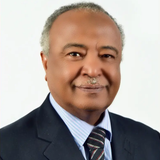
Professor Mekki El ShiblyExecutive Director, Cognisance Centre for Strategic Studies
The Cost of FFC’s Failing to Sequence Contradictions
As the war in Sudan intensifies and millions continue to suffer under a worsening humanitarian catastrophe, one essential question arises: Can the civilian forces play a genuine role in ending the war and shaping a different future? The answer depends squarely on the condition of the Forces of Freedom and Change (FFC), which, since the December Revolution, have embodied the greatest hope for democratic transition.
The painful truth, however, is that divisions within the FFC, rooted in a failure to properly sequence and prioritise contradictions, as well as in power struggles, have weakened it and exposed it, both locally and internationally, as an entity incapable of unified action. This vacuum has been quickly exploited by two actors who know how to capitalise on such opportunities: the military, who present themselves as “guardians of stability”, and the Islamists, who are attempting a gradual comeback through alliances with power centers inside the army and the deep state.
Civilian Division: A Double Loss
Fragmentation among the civilian forces is not a passing internal quarrel; it is a double loss. First, it disheartened the Sudanese street, which lost confidence in the politicians’ ability to rise above narrow struggles for power. Second, it gave the international community a convenient excuse to sideline civilians and lean more heavily on the military in shaping settlements.
The result is that any external initiative, such as the Quartet’s (United States, United Kingdom, Saudi Arabia, United Arab Emirates), lacks a credible civilian partner. Initiatives remain hollow, while platforms like “Somoond” are left to fill the gap with limited capacity.
Unity Does Not Mean Dissolution
Calling for FFC unity does not mean erasing ideological differences or merging all parties into a single body. What is required, simply, is agreement on a minimum common programme around the major issues: ending the war immediately, protecting civilians, delivering humanitarian aid, and initiating a new democratic path based on civilian rule and institutional reform.
Such a programme can restore credibility to the civilian forces both domestically and internationally, and allow them to reclaim influence over the political equation. Without it, international initiatives will remain little more than communiqués, and the hopes of the Sudanese people will remain suspended in the air.
The Quartet Initiative: A Conditional Opportunity
The Quartet initiative could prove to be a turning point, but only if the civilian forces are ready. Entering it while divided would make it nothing more than a tool for reproducing military and Islamist dominance. But if civilians can present themselves as a broad and united civilian front, the initiative could genuinely mark the beginning of ending the war and opening a new chapter.
Here lies the responsibility: the FFC is not merely defending its political standing, but the right of the Sudanese people to have a responsible civilian leadership that reflects their aspirations.
Lessons from the December Revolution
It is crucial to revisit the mistakes of the past experience so as not to repeat them. The December Revolution paid a heavy price for certain miscalculations by the FFC.
For example, prolonging the sit-in at the Army Headquarters without a clear risk management strategy paved the way for the June 3rd massacre. This was not only a horrific crime, but it was the moment that broke the back of the mass movement and restored the military and Islamists to the driver’s seat.
Similarly, negotiations with the Military Council exposed deep confusion. Civilian leaders swung between maximalist slogans like “full civilian rule” and major concessions that disillusioned the street and dishonored the sacrifices of the martyrs. This inconsistency cost the FFC the initiative, buying the military time and space to consolidate their position, while leaving the public frustrated and uncertain.
Moreover, the inability to properly sequence and manage internal contradictions among civilian groups led to repeated splits. Instead of agreeing on a minimum programme to manage the transition, some leaders were consumed with internal disputes, making unity fragile and vulnerable to collapse at every turn. This resulted in the fragmentation of the FFC into the Central Council, the National Charter, then Taqaddum and the Democratic Bloc, followed by Somoond and Tasis, and finally the defection of some Somoond leaders who abandoned the cause of ending the war by aligning themselves with the so-called “Battle of Dignity” camp.
Recognising these mistakes is not an exercise in self-flagellation, nor does it erase many achievements of the FFC. Rather, it is a necessary step toward building a more mature political trajectory. The experience has taught us that slogans alone are not enough, that civil action requires a flexible strategic vision, capable of distinguishing between the urgent and the deferred, and of managing disagreements in a way that safeguards unity instead of eroding it.
Toward a Minimum Common Programme
After six years of unjustified fragmentation within FFC, a realistic and urgent mechanism is needed to overcome divisions. A practical step would be the formation of a small joint committee with balanced representation from the various blocs, tasked with drafting a minimum common programme within a short timeframe (for example, one month).
To ensure success, the process should be guided by an independent national facilitator widely accepted across the spectrum, either a respected national figure or an independent think tank. The facilitator’s role would be to structure the dialogue, manage disputes, and draft outcomes in inclusive language, preventing any single group from dominating and avoiding the deadlocks that plagued past attempts.
The minimum programme should not aim to erase ideological differences or merge parties into one body. Rather, it should focus on urgent priorities that all can agree upon, including:
- An immediate ceasefire and movement toward a comprehensive truce under regional and international auspices.
- Civilian protection and unhindered humanitarian access, insulated from military or partisan agendas.
- A renewed transitional process anchored in civilian authority, with reforms to security and state institutions.
- Broader inclusion of resistance committees, youth, professionals, and civil society alongside political parties.
A joint committee, supported by an independent national facilitator, can provide the FFC with a credible platform to rebuild trust at home and abroad, and finally put an end to the cycle of fragmentation that has undermined its leadership role.
With the AU–IGAD civilian meeting set for October 2025, the FFC cannot afford to arrive divided. A brief, no-nonsense dialogue, facilitated by independent Sudanese think tanks, could hammer out a minimum programme. Anything less risks handing the agenda back to generals and Islamists. AU–IGAD October dialogue must be seized as a breakthrough, not squandered as yet another missed opportunity.
Transparency First
No civilian front will succeed if it repeats past mistakes of selective negotiations and ambiguous deals. What is needed today is a clear and transparent discourse that places the people of December at the heart of the political process, restoring their confidence that someone is genuinely speaking for them, rather than bargaining for power shares in closed rooms.
Conclusion
The unity of the FFC is neither a political luxury nor a tactical maneuver. It is a strategic necessity for the success of the Quartet initiative and for rebuilding a civilian-led political path.
If the civilian forces succeed in overcoming their divisions and agreeing on a minimum common programme, they will restore hope to the Sudanese people for a different future, and prove to the world that Sudan is not hostage to the gun or to the Islamists’ agenda. But if they fail, they will leave the door wide open to an endless bloody conflict, and squander a historic opportunity that may not come again.
melshibly@hotmail.com