
Sudan's Peace Between the Hammer of American Sanctions and the Anvil of Arab Veto
Sudan’s war, now entering its third year, has created the world’s worst humanitarian crisis: millions displaced, famine spreading, and a state teetering on collapse. Until now, international diplomacy has been paralysed.
Sudan's Peace Between the Hammer of American Sanctions and the Anvil of Arab Veto
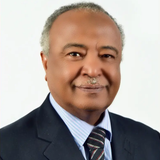
Professor Mekki El Shibly
Executive Director, Cognisance Centre for Strategic Studies
Will the US escalation change the Sudanese war equation?
Sudan’s war, now entering its third year, has created the world’s worst humanitarian crisis: millions displaced, famine spreading, and a state teetering on collapse. Until now, international diplomacy has been paralysed. But Washington just turned up the heat with a two-pronged move, a joint “Quad” statement with Egypt, Saudi Arabia, and the United Arab Emirates, and fresh sanctions on Sudanese Islamists accused of links to Iran.
The question is whether this mix of diplomacy and coercion can finally shift the balance in a conflict where every past initiative has failed.
A Roadmap with Promise
The Quad’s September 12 statement reads like the most ambitious blueprint yet. It pledges a three-month humanitarian truce leading to a permanent ceasefire, followed by a nine-month transition to a civilian-led government. It insists there is no military solution, rejects Islamist resurgence, and calls for an end to external arms supplies.
On paper, this sequencing, truce, ceasefire, and transition offer the clearest timeline for de-escalation since the war began. It signals unusual alignment between Washington and Arab powers that have often been at odds over Sudan. If implemented, it could reset the trajectory of the war.
But here is the catch: Sudan’s history is littered with failed initiatives. From the Jeddah Declaration to multiple Western-hosted conferences, each collapsed under what I call the “reverse veto”: if one Arab state disagreed, the process was paralysed. Egypt, Saudi Arabia, and the UAE have each backed different factions, and their rivalries have kept the Sudanese peace hostage. The durability of this new Quad alignment is the real test.
Sanctions with Teeth
The second U.S. move, sanctions on an armed group leader, Gebreil Ibrahim Mohamed Fediel and the Al-Baraa Bin Malik Brigade, is just as significant. It directly targets Sudan’s Islamist current and its alleged links with Iran’s Revolutionary Guard Corps.
For Sudanese civilians, this is vindication. For years, they have argued that hardline Islamists are the real spoilers, manipulating the army leadership and blocking compromise. By naming and sanctioning them, Washington has elevated civilian claims to the international agenda.
It also portrays Sudan as part of a broader Middle East conflict. Linking Islamist networks to Iran transforms Sudan from a “forgotten war” into a geostrategic fault line. This may finally mobilise the attention that Sudan’s suffering has long deserved.
Three Triangles of Power
The two American moves must be seen through the three overlapping “triangles” that shape Sudan’s war.
- The Arab Triangle (Egypt, Saudi Arabia, UAE) has long acted as both financier and spoiler. Its internal divisions have perpetuated the war. The Quad suggests a rare alignment, but whether it can hold is uncertain.
- The Western Triangle (Washington, London, Geneva) has the capacity to impose sanctions, mobilise aid, and set diplomatic terms. But it has lacked cohesion, allowing the Arab veto to dominate. Washington is now raising the stakes, but will London and Geneva match it?
- The Sudanese Triangle (SAF, RSF, civilians) remains the core battlefield. The army leans on Islamist networks in Port Sudan, the RSF consolidates its grip in Darfur, while civilians, from resistance committees, think tanks, to the Somoud coalition, continue to offer the only credible vision for reconstruction. Unless civilians are central to the Quad roadmap, it risks becoming yet another elite bargain.
Risks Ahead
None of this is risk-free. The warring parties may treat the three-month truce as cover to rearm, while offering only lip service to peace. Sanctions could provoke an Islamist backlash, stoking nationalism or pushing Sudan deeper into Tehran’s orbit. The timeline for transition may prove far too optimistic given the scale of destruction. Agreement on the duration of the transition to span at least five years after the war is another issue of concern
And there is still no clear mechanism to enforce compliance. Without a robust follow-up, a Quartet monitoring committee, UN backing, AU involvement, and technological verification, the roadmap could unravel like its predecessors.
Monitoring Mechanism
In this context, the importance of establishing an effective mechanism to monitor the implementation of the five pillars is highlighted. The lack of follow-up and oversight is what has thwarted previous initiatives, foremost among them the Jeddah Platform. This mechanism could comprise a quadripartite monitoring committee, supported by a UN mission, with an African force on the ground, and the utilisation of advanced technologies, such as satellites and drones, to monitor violations. Establishing such a hybrid monitoring system could prevent warring parties from exploiting the vacuum and provide the international community with a practical tool for applying pressure and imposing more painful sanctions.
A Critical Test in New York
As world leaders gather in New York for the UN General Assembly, this moment is a test of political will. For Washington and its allies, the choice is whether to turn rhetoric into action, aligning sanctions, humanitarian aid, and diplomacy to finally break the Arab veto. For the Arab Triangle, the choice is whether Cairo, Riyadh, and Abu Dhabi can put aside rivalries and impose real costs on continued war.
For Sudanese civilians, the message is bittersweet: they are mentioned in the Quad principles but still excluded from the real table. Unless they are brought in as decision-makers, not symbols, the cycle of declarations abroad and devastation at home will continue.
Conclusion
Washington’s mix of sanctions and diplomacy marks a new phase in the world’s response to Sudan. It recognises that this is no longer just a humanitarian disaster, but a geostrategic crisis. Yet peace will not come from statements alone. It requires discipline among Arab and Western powers, and above all, the elevation of Sudanese civilians from the margins to the centre.
If New York becomes the place where that shift happens, Sudan might finally step off the path of endless war. If not, the third year of conflict will look tragically like the first two.