
Sudan Crossroads - Guarantees for Generals and Justice for Victims
As Sudan’s war grinds on, millions endure displacement, hunger, and violence. The Quartet (United States, Egypt, Saudi Arabia, and the United Arab Emirates) has laid out a roadmap: a humanitarian truce, a ceasefire, and finally a transition to civilian government.
Sudan Crossroads: Guarantees for Generals and Justice for Victims
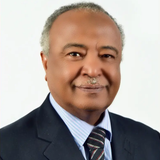
Professor Mekki El ShiblyExecutive Director, Cognisance Centre for Strategic Studies
The Impasse of Reconciling Guarantees and Justice, Without Derailing Peace
As Sudan’s war grinds on, millions endure displacement, hunger, and violence. The Quartet (United States, Egypt, Saudi Arabia, and the United Arab Emirates) has laid out a roadmap: a humanitarian truce, a ceasefire, and finally a transition to civilian government. It is logical sequencing, but it raises a hard question: how can Sudan’s generals be persuaded to step aside when they fear prosecution, loss of power, and retribution?
The uncomfortable truth is that no military leader will voluntarily withdraw from politics without credible guarantees. Yet Sudanese civilians demand justice for atrocities, and survivors reject another cycle of impunity. The challenge is to reconcile these two imperatives, guarantees and justice, without derailing peace.
Lessons from Other Post-Conflict Transitions
Sudan is not alone in facing this dilemma. Africa and beyond offer useful, if imperfect, precedents.
- Rwanda (1994): After the genocide, the Rwandan Patriotic Front (RPF) pursued accountability through international tribunals and Gacaca community courts. No guarantees were offered to the old regime. Justice was delivered, but political exclusion left enduring grievances.
- Liberia (2003): Exile for Charles Taylor and guarantees for warlords secured peace, though justice lagged. Liberia’s Truth and Reconciliation Commission provided partial accountability but impunity for many.
- Mozambique (1992): A Rome Agreement granted amnesty to Mozambican National Resistance (RENAMO) rebels by the Mozambique Liberation Front (FRELIMO) and integrated fighters into the army. It stabilised peace and turned RENAMO into a party, though violence later resurfaced.
- Algeria (late 1990s): Broad amnesty for Islamist fighters ended the war quickly but silenced victims and entrenched authoritarianism.
- Ethiopia (2022): A deal with the Tigray People’s Liberation Front granted political space and reintegration but postponed justice, leaving fragile trust.
- South Africa (1994): Its Truth and Reconciliation Commission offered amnesty in exchange for full disclosure, creating a middle path between impunity and prosecutions.
- Colombia (2016): The Revolutionary Armed Forces of Colombia (FARC) rebels received reduced penalties tied to confessions and guarantees of political participation, a hybrid model mixing justice and reintegration.
- South Sudan (2015&2018): Its repeated peace agreements offered sweeping guarantees to armed elites without justice or reform, producing endless cycles of renewed conflict.
What Sudan Can Learn - A Hybrid Path to Peace and Accountability
These cases suggest three clear lessons for Sudan:
- Selective Accountability: Full-scale prosecutions are unrealistic. But prosecuting top commanders while offering exile, reduced penalties, or reintegration to others can balance justice and stability.
- Restorative Mechanisms: Sudan needs a truth and reconciliation process, rooted in its own traditions, that acknowledges victims, provides reparations, and rebuilds trust.
- Security Guarantees: Generals will only step back if they and their forces have credible safety nets, whether through conditional amnesty, exile, or integration into reformed security structures. However, such guarantees must be overseen by a civilian-led transitional authority, rather than being left in the hands of the military itself.
Avoiding the South Sudan Trap
The greatest danger is repeating South Sudan’s cycle: endless guarantees to warlords without accountability or reform. That path brings only fragile truces followed by more violence. Sudan must instead strike a careful middle-ground hybrid path involving credible guarantees that remove generals from power, paired with enough accountability to reassure victims and prevent future impunity.
Warranty for the Hybrid Path
For a Hybrid Path to Peace and Accountability to succeed, guarantees must be credible, coordinated, and publicly supported. The Quartet can play a decisive role by providing political backing and tangible incentives for the generals to step aside. Still, the UN also has an important role: lending international legitimacy, offering technical support for transitional justice, and establishing peacekeeping or monitoring mechanisms to ensure compliance. Regionally, the African Union (AU) and IGAD are vital. They bring credibility as African players, can unite Sudanese civilians under one umbrella, and can serve as guarantors that any agreement is not imposed from outside but is based on regional consensus. In short, the Quartet offers leverage, the UN provides legitimacy and monitoring, and the AU/IGAD ground the process in African ownership, creating a multilayered guarantee system. Without this, Sudan’s generals will refuse to withdraw, and Sudan’s civilians cannot lead.
The Quartet’s Opportunity
The Quartet’s sequencing, truce, ceasefire, and civilian transition offer a real opening. But its success depends on Sudanese civilians presenting a unified, strategic voice. Fragmented civilian actors will only strengthen the generals’ hand. A broad civilian front spearheaded by uniting the Forces of Freedom and Change (FFC) must step forward with a plan for hybrid justice and reconciliation, backed by UN, AU, and IGAD mediation.
Peace in Sudan will not come cheaply. Guarantees without justice risk entrenching impunity; justice without guarantees risks prolonging war. The challenge is to combine both in a Sudanese-led formula that allows generals to step aside without hijacking Sudan’s future.
Other nations have faced this choice. Rwanda, Liberia, Mozambique, Algeria, Ethiopia, South Africa, Colombia, and South Sudan each show that the cost of peace is real, but so is the cost of ignoring justice. Sudan’s choice is stark: craft a balanced path toward guarantees and justice, or remain trapped in endless cycles of bloodshed.
All Sudanese, myself included, carry deep animosity and bad blood from the killings, looting, and displacement inflicted by the generals of war. Any talk of guarantees or settlements understandably feels like an insult to the blood of martyrs and the suffering of victims. Yet the painful truth is that Sudan now stands on the edge of disintegration. A perfect peace without compromise is not possible. That is why a hybrid path to peace and accountability, though it cannot heal every wound or erase the bitterness, remains the only viable way to save the nation for future generations from collapse and fragmentation. It is a choice of necessity, not a choice of satisfaction, the only way to build a tomorrow in which the justice of heaven, which is lenient but not neglectful, can unfold, without Sudan collapsing on everyone's heads.
Guarantees without justice risk impunity. Justice without guarantees risks war. The time to decide is now.
melshibly@hotmail.com