
Sequencing Peace in Sudan-A Blueprint for an Enforceable Quartet Ceasefire
The war in Sudan has entered its most destructive phase. Cities lie in ruin, millions are displaced, and humanitarian agencies operate at the edge of collapse.
Sequencing Peace in Sudan: A Blueprint for an Enforceable Quartet Ceasefire
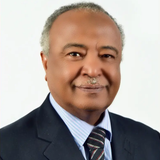
By Professor Mekki Medani El Shibly
Executive Director, Cognizance Centre for Strategic Studies (CCSS)
The war in Sudan has entered its most destructive phase. Cities lie in ruin, millions are displaced, and humanitarian agencies operate at the edge of collapse. Previous attempts to silence the guns, most notably the Jeddah initiative, failed not because of a lack of goodwill, but because they lacked credible mechanisms of implementation, sustained monitoring, and financing.
What Sudan needs now is not another declaration of intent, but a sequenced, enforceable, and nationally grounded truce–ceasefire plan. The proposed Quartet framework, led by the United States, Saudi Arabia, Egypt, and the United Arab Emirates, with the African Union and IGAD in support, can succeed where others have failed, if it couples its diplomatic leverage with local ownership and technical precision.
This is the core message of this article. It sets out a nine-month roadmap for transforming the current battlefield stalemate into a stabilised security environment that can serve as the foundation for a civilian-constitutional transition. As the Quartet meeting expected to take place later this October in Washington draws near, this blueprint is offered as a contribution to support the Quartet’s deliberations and help translate intentions into enforceable outcomes.
1. The Objectives: From Chaos to Controlled Calm
- Immediate humanitarian access. Within two to three weeks of a truce declaration, humanitarian corridors must be opened and verified. Relief operations should proceed in tandem with the stabilisation of battlefronts—freezing lines of combat and protecting civilians.
- A credible monitoring framework must be established. This was the missing element in Jeddah. Quartet oversight, backed by African Union and IGAD observers, can bring the verification and deterrence capacity necessary to stop violations before they reignite the conflict.
- The process must deal decisively with spoilers, especially Islamist factions and proxy militias that profit from chaos. These groups, remnants of the old regime, have sabotaged every peace attempt since 2019. Their exclusion from ceasefire arrangements, combined with targeted financial sanctions, is essential.
- Finally, all this must be linked to the next phase of civilian-constitutional transition. A truce without a political horizon is unsustainable; a political process without a truce is impossible.
2. A Realistic Timeline
The roadmap envisions three clear periods:
- Months 1–3: Humanitarian truce, opening corridors, building confidence, and freezing frontlines.
- Months 4–9: Formal ceasefire, Quartet-led monitoring, and the start of troop redeployment and integration planning.
- Beyond Month 9: Transition to civilian-constitutional governance once credible ceasefire compliance is verified for a period of no less than five years.
This structured approach recognises Sudan’s fragmented geography; some areas, like the East and North, remain calm, while others, such as Darfur and Kordofan, remain volatile.
3. Making Negotiations Work: The Facilitation Architecture
Past initiatives faltered because they relied exclusively on political actors, whose fragmentation and rival agendas made enforcement impossible. This proposal adopts a dual facilitation structure:
- The Quartet acts as mediator, guarantor, and enforcer. It convenes the Sudanese Armed Forces (SAF) and the Rapid Support Forces (RSF), sets negotiation protocols, and provides monitoring and logistical resources.
- Sudanese independent think tanks, non-partisan and technically grounded, serve as a Technical Advisory Group (TAG). These institutions, drawn from civil society and academia, contribute conflict mapping, ceasefire verification methodologies, and risk analyses.
This structure combines international leverage with domestic legitimacy—shielding the process from political capture while anchoring it in local expertise.
4. Zones of Calm and Zones of Conflict
Implementation must reflect Sudan’s geographic reality.
- Zones of relative calm, the East, Central, and Northern regions, should see immediate local truces, humanitarian corridors, and monitored returns of displaced populations.
- Zones of intense fighting, Darfur and Kordofan, require Quartet-supported hybrid monitoring missions, with AU participation and satellite-based verification. Safe humanitarian zones around Nyala, El Fasher, and Kadugli must be established and protected.
Such differentiation allows for progress where possible and containment where necessary.
5. Financing the Truce: The Missing Piece
No peace process can survive on promises alone. The truce–ceasefire phase is estimated to cost $320 million over nine months. This covers monitoring missions, humanitarian logistics, civil society liaison structures, and a contingency fund for emergency response.
Funding should flow through a Quartet Trust Fund for Sudan Stabilisation (QTFS), managed by UNDP, ensuring transparency and pooled donor participation.
- The US and EU can underwrite humanitarian and monitoring costs.
- Saudi Arabia and the UAE can support logistics and contingency airlifts.
- The UK and Norway can back local monitoring and civic mechanisms.
Such shared financing creates accountability and signals the seriousness of purpose.
6. Monitoring and Measurable Results
Success must be quantifiable.
The Quartet should issue monthly public reports tracking key performance indicators:
- Volume of humanitarian aid delivered.
- Reduction in civilian casualties.
- Verified ceasefire violations per month.
- Progress in SAF–RSF disengagement.
- Exclusion of Islamist spoilers and other disruptors.
Transparency is not just a moral principle; it’s a deterrent against relapse.
7. Managing Spoilers and Militias
Quartet countries should jointly:
- Freeze assets of Islamist networks financing proxy militias.
- Exclude Islamist-aligned armed groups from ceasefire frameworks.
- Sanction any interference with humanitarian corridors or truce monitoring.
For other militias and criminal networks, incentives for disarmament and access to development aid can turn potential spoilers into stakeholders.
8. Anticipating Risks and Mitigating Them
The plan recognises three layers of risk:
National: Islamist networks or splintered SAF/RSF factions could sabotage truces. These risks must be contained by joint Quartet monitoring, confidence-building measures, and isolation of non-compliant commanders.
Regional: Cross-border arms flows from Libya, Chad, and South Sudan, as well as potential policy divergence between Egypt and the UAE, threaten to destabilise progress. A Quartet-AU border taskforce and a unified humanitarian coordination framework can mitigate these.
International: Quartet coordination failures or funding gaps would quickly unravel the process. A lean monitoring mission, a clear division of labour, and a pooled donor fund can ensure coherence and sustainability.
9. Linking the Military to the Civilian Track
The truce–ceasefire phase is not an end in itself. Its success will enable the civilian–constitutional transition, where unified civilian representation under the Forces of Freedom and Change (FFC) can negotiate a legitimate framework for governance.
Verified ceasefire compliance will allow safe humanitarian operations, community stabilisation, and the technical groundwork for voter registration. Most importantly, neutralising Islamist spoilers will open political space for the re-emergence of a credible, democratic civilian bloc.
10. The Way Forward
Sudan’s tragedy is not inevitable; it is the product of unmanaged fragmentation and absent enforcement. The Quartet has a rare opportunity to change this trajectory. By integrating credible financing, enforceable monitoring, and locally grounded facilitation, it can turn the battlefield into a bridge toward peace.
This process demands patience, precision, and political will. But the alternative, continued collapse, would cost far more in lives and legitimacy.
An integrated truce–ceasefire phase is not just a diplomatic exercise. It is the only practical route to a civilian-led, legitimate Sudanese state that can rise again from the ashes of war.