
Leveraging Economic Instruments to Enforce Sudan Truce and Ceasefire
The escalating war in Sudan after the fall of El Fasher is no longer just a confrontation between military forces but has become an economy in its own right. Networks of gold, livestock, crops, and fuel finance the conflict and keep it ablaze, while weakening state institutions and dismantling…
Leveraging Economic Instruments to Enforce Sudan Truce and Ceasefire
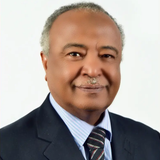
By Professor Mekki Medani El ShiblyExecutive Director, Cognisance Centre for Strategic Studies (CCSS)
The escalating war in Sudan after the fall of El Fasher is no longer just a confrontation between military forces but has become an economy in its own right. Networks of gold, livestock, crops, and fuel finance the conflict and keep it ablaze, while weakening state institutions and dismantling what remains of public trust.
Gold, livestock, crops, and fuel have become the lifeblood of conflict, traded through opaque networks that enrich warlords, empower intermediaries, and erode the state’s authority.
To end this cycle, ceasefire diplomacy must move beyond the rhetoric of peace declarations. The real challenge is to dismantle the war economy and replace it with what I call a compliance economy: a framework that links economic access, liquidity, and legitimacy directly to verified progress toward peace.
It should be noted that the proposed economic and institutional mechanisms are not a substitute for hybrid ceasefire monitoring arrangements but rather a complement to them. These mechanisms represent a parallel dimension of enforcement, focusing on resource control and financial transparency, while hybrid monitoring forces, supported by satellite imagery, drones, and other modern verification tools, ensure ground-level compliance. Together, they form an integrated framework that links economic accountability with technical and field-based oversight, thereby enhancing both credibility and sustainability of the truce and ceasefire enforcement process.
The Missing Economic Lever in Ceasefire Diplomacy
Every previous ceasefire in Sudan has faltered for a simple reason: it ignored the financial arteries of the conflict.
Both the Sudanese Armed Forces (SAF) and the Rapid Support Forces (RSF) rely on illicit trade, especially gold and livestock, to fund their operations. At the same time, each fears prosecution if peace takes hold, creating a perverse incentive to fight on.
The Quartet, comprising the United States, Saudi Arabia, Egypt, and the United Arab Emirates, holds the keys to reversing this logic. Each member controls critical trade routes, banking channels, and diplomatic legitimacy. What is needed now is a coordinated mechanism to use these levers not merely to mediate peace, but to enforce it.
A Mechanism for Economic Enforcement: The S-RTOC
The Sudan Resource Trade Oversight Committee (S-RTOC) offers such a mechanism.
This proposed joint body would bring together the Quartet, the African Union, UNDP, the Central Bank of Sudan (CBOS), the Ministry of Minerals, and Sudanese civilian experts.
Its core function: to oversee and certify the export of Sudan’s key commodities, gold, livestock, crops, and fuel, ensuring that proceeds flow through transparent, monitored channels anchored on a win-win philosophy.
Certified exporters would be listed in a Certified Exporter Registry (CER), with payments deposited into CBOS-managed escrow accounts. Access to these funds would depend on verified compliance with truce and ceasefire commitments.
In essence, the S-RTOC transforms trade into an instrument of accountability, aligning financial incentives with peace enforcement rather than war profiteering.
Economic Leverage for Peace
This framework works because it speaks the language of those it seeks to influence.
For Egypt and the UAE, both major destinations for Sudan’s gold, crops, and livestock, participation ensures legally traceable trade and protection from sanctions. For the SAF and RSF, it provides a pathway to liquidity, but only through compliance with the peace trajectory.
Cross-border monitoring taskforces at Port Sudan, Argeen (Egypt), and UAE gold import terminals would verify certified shipments. Non-certified cargo would face denial of entry or customs suspension, a clear and enforceable consequence.
By institutionalising multilateral verification, digital traceability, independent audits, and Sudanese civil oversight, the Quartet can ensure that Egypt and the UAE operate as cooperative guarantors, rather than unilateral beneficiaries, of Sudan’s resource trade framework.
These safeguards reinforce the win–win principle, uphold transparency, and sustain confidence in the broader ceasefire-linked reconstruction process.
Public dashboards monitored by UNDP, updated monthly, would display certified exporters and transaction volumes, ensuring transparency and public confidence. The result: an ecosystem where peace pays and war bankrupts.
Rehabilitating the Central Bank of Sudan
At the heart of this design lies the Central Bank of Sudan (CBOS), the institutional anchor for trade oversight and monetary stabilisation.
Years of politicisation and internal decay have eroded its credibility, but with Quartet-backed technical advisers and Sudanese think tank oversight, CBOS can be restored as a pillar of financial integrity.
By managing escrow accounts, auditing export flows, and enforcing compliance charters, the bank can help reassert legitimate state authority in one of the most distorted economies in Africa.
From War Economy to Peace Economy
The S-RTOC model is more than a bureaucratic proposal; it is a political economy of peace.
By tying trade access and liquidity to verified compliance, it provides both sides of the conflict with measurable incentives to uphold a truce and ceasefire.
It also re-centers Sudanese civilian institutions, through the Civilian Transition Task Force (CTTF) and independent think tanks, as custodians of oversight and legitimacy. This is essential not only for monitoring compliance, but for rebuilding public trust in governance itself.
Over time, this framework could gradually shift control of Sudan’s economy away from armed actors and toward civilian regulators, creating a virtuous cycle where economic transparency sustains political stability.
The Quartet’s Strategic Choice
The Quartet now faces a pivotal decision: whether to remain a mediator of ceasefires that collapse, or to become the guarantor of a peace process grounded in measurable, economic enforcement.
By embracing the S-RTOC approach, the Quartet can convert its influence into a durable instrument of accountability, one that rewards transparency, punishes non-compliance, and builds a credible bridge from truce to transition.
This is not only a Sudanese imperative; it is a regional necessity. A stable, transparent, and economically integrated Sudan serves the interests of all, a peace built not on signatures, but on systems.
November 2025