
Islamists in Sudan-From the Legitimacy Dilemma to the Existential Impasse
Few people know that my first encounter with Sudan’s Islamist movement dates back to my childhood in the early 1960s, when a relative took me to the Omdurman Cultural Club, then a discreet recruitment hub for the Muslim Brotherhood. The experience failed to capture the imagination of a child…
Islamists in Sudan: From the Legitimacy Dilemma to the Existential Impasse
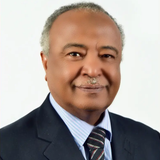
By Professor Mekki El Shibly
Executive Director, Cognisance Centre for Strategic Studies
An Early Beginning and a Predictable End
Few people know that my first encounter with Sudan’s Islamist movement dates back to my childhood in the early 1960s, when a relative took me to the Omdurman Cultural Club, then a discreet recruitment hub for the Muslim Brotherhood. The experience failed to capture the imagination of a child raised in a tolerant Sufi family, and my connection with the movement ended before it began. Yet over the decades, I maintained close contact with Islamists of all ranks, witnessing from near their internal contradictions and the gradual moral erosion that followed the June 1989 coup, when the Islamists transformed themselves from a genuine student movement into an authoritarian regime sustained by corruption and repression.
December Revolution: The People’s Verdict
Sudan’s December 2018 Revolution was a historic moment of truth. It was not foreign intervention, nor a conspiracy of the “Quartet,” that toppled the regime. It was a clear and final verdict by the Sudanese people against the bogus Islamist project itself. The chants that filled the streets, “Freedom, Peace, Justice”, were a collective indictment of decades of deceit, nepotism, and the abuse of religion to justify tyranny. The blood of martyrs was shed not merely to oust Omar al-Bashir, but to bury an entire system that had hollowed out the state and degraded its people.
Yet, even today, the Islamists refuse to admit that the December Revolution marked the ultimate withdrawal of their legitimacy. They cling to conspiracy theories, ignoring the simple truth: it was the Sudanese people who dismissed them. Their attempt to return to power through the October 2021 coup and the April war only deepened their isolation, exposing their dependence on chaos and manipulation rather than genuine support.
Unanswered Questions
A sincere discourse with Sudan’s Islamists must begin with uncomfortable questions they can no longer evade:
- How do they justify overthrowing a democratically elected government in 1989 while condemning the army’s alignment with the people in 2019?
- Why has their political survival always depended on coups and wars, in 1989, 2003, 2021, and again in 2023? How many more wars must Sudan endure for them to grasp that armed power is not legitimacy?
- With what moral authority do they claim to represent Islam when they have turned a faith of justice and mercy into a tool for greed and repression?
- Who are they to label others as “foreign agents” when they themselves sought protection from foreign governments and even non-Muslim movements, from George Habash to the infamous Carlos, under the so-called “Popular Arab-Islamic Congress”?
- How do they explain the lavish lifestyles of their leaders abroad while millions of Sudanese sink into poverty?
Three Decades of Organised Corruption
Between 1989 and 2019, Sudan under Islamist rule became a web of corruption. Public wealth was plundered, institutions privatised for partisan gain, and state resources distributed to loyalists as rewards for obedience. What began as a promise of moral governance degenerated into a cartel of privilege and impunity.
Even the late Dr. Hassan al-Turabi, the movement’s intellectual founder, confessed in a 2010 televised interview: “We found nothing but corruption and monopoly. Those who once sought power for Islam have become its greatest burden. They devoured the nation’s wealth strangely and shamelessly.” His words were later echoed in the 2019 documentary The Great Secrets, where leaders of the Islamist Movement publicly admitted that greed and bloodshed had consumed both leadership and base, destroying the so-called “civilisational project” they once invoked to justify the June 1989 coup.
The Myth of Reporting to the Judiciary to Prove Their Corruption
When confronted with allegations of corruption, Islamists often challenge their critics to “prove it in court.” But which court? The judiciary they handpicked, the one instructed never to issue rulings against state institutions or their companies. The evidence of corruption was visible to every Sudanese, in the sudden wealth of officials who once lived in squatter houses, and in the opulent villas that rose overnight. A society does not need a compromised court to recognise moral rot. The verdict has already been rendered in the court of public conscience.
A Must-Have Review
Before discussing the Islamists' right to return to power in Sudan after thirty years of rule, the Sudanese people have the right to question their leaders and their base: Are there any among them who have not been corrupted by personal or family benefits from the Islamists over these three decades, whether through employment, housing, or services? How can they expect the Sudanese people to trust them with their children's future, considering they appointed their unqualified sons to lead ministries, government agencies, embassies, universities, and the private sector? How can the Sudanese feel safe under their leadership again, given that they distributed the most prestigious residential areas in the capital and other states to their members and followers, excluding other deserving Sudanese? Can the Sudanese consider the future of Islamist rule in Sudan separately from the thirty-year experience during which they relegated Sudanese to second-class citizenship? Can the Sudanese reconcile with this kind of Islamist rule before a revelation prompts withdrawal, regret, and repentance?
From the Legitimacy Crisis to the Existential Abyss
Since their downfall in 2019, the Islamists have struggled with a profound crisis of legitimacy. Their October 2021 coup deepened it; their role in igniting the April 2023 war pushed it to the brink of extinction. The war revealed the movement’s bare essence: a faction with no social base, no religious credibility, and no political horizon, surviving only through alliances of malfeasance and violence.
Now, as the world demands an end to Sudan’s war, some Islamists still threaten to fight “to the end.” But this time, the end may not be rhetorical. It may be existential. They face a choice between voluntary withdrawal from politics or enforced exclusion by the Sudanese, and an international community that has run out of patience with religious militarism.
Lessons from Hamas and Hezbollah
The trajectories of Hamas in Gaza and Hezbollah in Lebanon offer a sobering mirror. Both movements once drew legitimacy from “resistance,” but over time, their obsession with hegemony consumed their moral capital. Hamas’s October 2023 war ended in negotiations, effectively pushing it out of the Palestinian political core. Hezbollah, once a symbol of defiance, has become a sectarian oligarchy presiding over Lebanon’s collapse, its “resistance” now seen by many Lebanese as a curse, not a shield.
Sudan’s Islamists risk the same fate. The fire they lit in April 2023 will not consume their enemies alone; it will burn the last illusion of a project that has already outlived its meaning.
A Final Admonition: Preach, Don’t Rule
Sudan still needs its Islamists, but as citizens and moral voices, not as rulers. If they wish to preserve any role in the country’s future, they must repent through truth and service, not slogans. They must step away from politics during the next transition and rebuild their credibility through honest social and religious work.
The few who remain untainted by power carry a moral duty to raise a new generation of Sudanese Islamists free from greed and dogma, a generation inspired by integrity, justice, and humility rather than privilege and deceit.
If Sudan’s Islamists learn from the tragedies of Hamas and Hezbollah, they might still find redemption. But if they persist in their addiction to power and war, history will record them not as victims of persecution, but as architects of their own extinction.
melshibly@hotmail.com