
From Structural Adjustment to Social Transformation 9
Amid Sudan’s devastating war and the international community’s urgent search for a ceasefire, it may seem untimely to revisit the country’s long and difficult economic journey. Yet these eight economic essays deserve renewed attention precisely because silencing the guns—vital as it is—will not…
From Structural Adjustment to Social Transformation: Lessons from Half a Century of Sudan’s Economic Experience
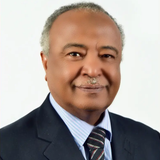
By Professor Mekki Medani El ShiblyExecutive Director, Cognisance Centre for Strategic Studies
Amid Sudan’s devastating war and the international community’s urgent search for a ceasefire, it may seem untimely to revisit the country’s long and difficult economic journey. Yet these eight economic essays deserve renewed attention precisely because silencing the guns—vital as it is—will not by itself deliver a sustainable peace. No ceasefire can endure unless Sudan rebuilds a functioning civilian economy and a social state capable of delivering justice, livelihoods, and hope. It is in this broader horizon that this series intervenes: as a contribution to the civil discourse that must parallel, and ultimately guide, the ongoing military and political negotiations.
A starting point is the recognition that Sudan’s post-war economic choices cannot be reduced to simplistic slogans such as “self-reliance”—a notion that now rings hollow after the near-total destruction wrought by the April 2023 war. The very “self” that Sudan is asked to rely upon has been exhausted: its productive base devastated, institutions fragmented, and human capital displaced. In this context, strategic re-engagement with international financial institutions—above all the IMF—is not a sign of dependency, but an act of collective survival and a pragmatic pathway to rebuilding.
The significance of these essays therefore goes beyond economic analysis. They seek to anchor a substantive civil conversation on reconstruction and development—one that reframes Sudan’s relationship with international institutions on the basis of sovereign partnership rather than isolation or blind acceptance. Their core message is straightforward: Sudan’s recovery will not emerge from battlefields or from the loud rhetoric of satellite channels, but from a new social and economic contract that reconciles fiscal realism with social justice, and transforms international cooperation into a tool for state-building rather than a mechanism of external tutelage.
For more than five decades, Sudan has oscillated between cycles of “reform” and collapse. Since the country’s first formal engagement with the IMF in 1978 and up to the outbreak of war in 2023, Sudan served as a testing ground for structural adjustment experiments: sometimes under the banner of “stabilisation,” at other times in the name of “liberalisation.” The outcomes, however, were painfully consistent: chronic economic fragility feeding chronic political fragility.
What makes Sudan’s case unique is that these economic programs mirrored the ideological swings of the state itself—from socialism to open markets, from political Islam to authoritarian neoliberalism, and then to an aspiring civilian state after the 2018 revolution. Through each cycle, one question kept returning: Can economic stability be achieved without sacrificing social justice?
Sudan’s experience shows that the problem was never simply the “IMF prescriptions,” but the absence of a national vision linking economics to politics. Reform programs were imposed from above, without participation from productive sectors and without social protection for the vulnerable. Predictably, each wave of reform produced hardship, protests, and—ultimately—the downfall of the political order that had launched it.
The late-1970s program under President Jaafar Nimeiri was the first major test of structural adjustment. The country pivoted abruptly from state-led socialism to economic liberalism: devaluing the currency, lifting subsidies, and liberalising prices—without institutions capable of managing the social shock. Export performance briefly improved, but inflation soared, unrest spread, and the program contributed directly to the 1985 popular uprising.
During the Third Democratic Period (1986–1989), Prime Minister Sadiq al-Mahdi attempted a more gradual, negotiated reform. But fierce political fragmentation, compounded by organised labour unrest fuelled by the National Islamic Front, crippled implementation. The result was yet another military coup—this time by the Islamists, inaugurating the 30-year “Ingaz” regime.
The Ingaz era (1989–2019) demonstrated the full fusion of politics and economics. It began with ideological denunciations of “Western dependency,” only to end in full pragmatic cooperation with the very institutions it had condemned. For two decades, oil revenues masked deep structural decay. When South Sudan’s secession in 2011 stripped away 75% of oil income, the entire rentier edifice collapsed, dragging the regime down with it.
The Transitional Period (2019–2021) briefly revived hope. Under Prime Minister Abdalla Hamdok, Sudan sought to align economic reform with democratic transformation. Some progress was achieved—especially the restoration of international confidence and steps toward debt relief. But internal fragmentation and the military coup of October 2021 cut the transition short just as it began to gain traction.
The April 2023 war brought Sudan into yet another phase of systemic collapse. Yet even amid this devastation, a historic opportunity exists. The world—and notably the IMF—has changed. In 2022, the Fund adopted a new strategy for fragile and conflict-affected states that prioritises flexibility, social protection, and institution-building, rather than the shock-therapy approach of the past.
Sudan’s path forward therefore must not begin from zero. It should begin from a critical consciousness of its own history: that reform succeeds only when it is national, participatory, and socially just. Development is not an accounting exercise; it is a social contract. And economics is not “separate from politics”—it is embedded at the heart of political legitimacy.
The deeper lesson of this series is that Sudan does not need another technocratic formula. It needs a new philosophy of development—one that places social justice, accountable governance, and ethical public leadership at the centre of any fiscal or structural reform. History has shown that reform without participation leads to collapse, just as justice without economic efficiency leads to paralysis.
Between these two extremes lies Sudan’s unfinished struggle: How do we transform our painful experience with structural adjustment into a forward-looking national vision? And how do we turn the economy into a tool of liberation—rather than a tool of dependency?