
Civilian–Constitutional Transition-Building the Path to Legitimate Governance
Sudan stands at a decisive crossroads. The collapse of the 2019–2021 transitional experiment and the devastation of the April 2023 war have demonstrated that partial pacts, elite bargains, and externally scripted blueprints cannot deliver legitimate governance.
Civilian–Constitutional Transition: Building the Path to Legitimate Governance
A Policy Paper to the Quartet (2)
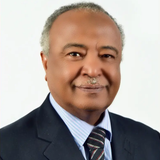
By Professor Mekki El ShiblyExecutive Director, Cognisance Centre for Strategic Studies
I. Introduction and Context
Sudan stands at a decisive crossroads. The collapse of the 2019–2021 transitional experiment and the devastation of the April 2023 war have demonstrated that partial pacts, elite bargains, and externally scripted blueprints cannot deliver legitimate governance. The civilian–constitutional transition must now be anchored in a durable social contract between the Sudanese people and the state, one that replaces both the expired revolutionary legitimacy of December 2018 and the flawed consensual legitimacy imposed by de facto powers or external actors.
The transition is not about “founding a new Sudan” through exclusionary political projects or elite slogans. Rather, it is about building a cohesive bridge from conflict to peace to democracy, ensuring that the transitional authority does not collapse under unrealistic burdens. The transitional period must serve as a bridge toward sustainable peace and democracy, not as a vehicle for premature “founding” projects that inevitably collapse under their own weight. The task is not “renaissance” or “establishment” but repair and renewal, enabling elected civilian institutions to, eventually, undertake the long-term establishment of a new Sudan.
This policy paper sets out the framework for the Quartet to support Sudanese civilians, independent civil society, and national actors in designing and sustaining this transition.
II. Objectives
The objectives of the civilian–constitutional transition are:
- Establish civilian legitimacy through a social contract grounded in popular support and the principles of freedom, peace, and justice ignited by the December Revolution.
- Create inclusive governance by integrating diverse civilian constituencies while excluding armed actors and spoilers from political dominance.
- Ensure security–civil balance through DDR (demobilisation, disarmament, reintegration) and unification of armed forces under a single national army.
- Advance transitional justice to restore trust and reconcile communities.
- Prepare credible elections after a minimum of five years, ensuring institutions and society are ready for democratic competition.
- Lay the foundation for economic recovery and social protection as part of rebuilding state legitimacy.
III. Social Contract as the Source of Legitimacy
The foundation of any upcoming transitional arrangement must be a social contract between the state and the Sudanese people, inspired by the principles of the December 2018 Revolution, freedom, peace, and justice. Unlike “revolutionary legitimacy,” which has now expired, or “consensual legitimacy,” which often masks the dominance of de facto forces or external actors, popular legitimacy through a binding social contract offers the only viable anchor for transitional governance.
This contract entails confronting accumulated challenges, including:
- Cessation of hostilities and security sector reform (DDR, RSF, Armed Movements integration).
- Transitional justice and reconciliation.
- Return and reintegration of displaced and refugees.
- Restoration of civil state institutions under the rule of law.
- Youth employment, women’s rights, and social cohesion.
- Economic recovery and re-engagement with the region and international community.
- Creating conditions for credible, free, and fair elections.
IV. A Five-Year Time Frame
A transitional period of at least five years is required to realistically fulfill the social contract and avoid renewed conflict. Experiences from Rwanda, Nepal, and Sudan’s own history confirm that shorter timelines (the Quartet suggested nine months) are insufficient for security reintegration, transitional justice, and political stabilisation.
Key risks of premature elections include:
- Former combatants converted to politicians, using violence to contest outcomes.
- Militarised elites subverting fragile institutions.
- Renewed grievances among excluded or marginalised groups.
Thus, elections should not precede the completion of core transitional tasks: cessation of hostilities, unification of the army, transitional justice, and restoration of civilian authority:
- Year 1–2: Consolidating truce and ceasefire, DDR initiation, humanitarian recovery, transitional justice mechanisms, and restoring basic services.
- Year 3–4: Deepening institutional reforms (judiciary, civil service, security), implementing decentralised governance, enabling youth and women’s participation, advancing economic stabilisation.
- Year 5: Preparing credible elections under a new constitutional framework, with safeguards against premature or destabilising polls.
V. Facilitation of FFC Meetings and Building the Path to Legitimate Governance
The Quartet must facilitate, but not dictate, Sudanese civilian dialogue. Lessons from Juba and the 2019–21 experience show that top-heavy bargains collapse. Instead, the path should be:
- FFC (Forces of Freedom and Change) Renewal: The FFC must reconstitute itself, shedding old rivalries, and broaden into a Transitional Assembly Grouping (TAG) of independent civilian movements, professional unions, women, and youth.
- Think Tanks as Technical Facilitators: Independent Sudanese research centres provide evidence-based facilitation, preventing domination by political elites or armed movements.
- Quartet Role: Provide guarantees, safe venues, and international legitimacy for these meetings, while ensuring spoilers (e.g., Islamist hardliners, armed opportunists) are isolated.
- Output: A Civic Transitional Compact, a binding document outlining commitments, roles, and principles of governance.
VI. Transition vs. Foundation: Lessons from Sudan and Beyond
The temptation to “establish a new Sudan” during transition has resurfaced in certain political circles, particularly among Tasis (civilian supporters of the RSF). Their “new Sudan” rhetoric echoes the failed SPLM project of the 2000s, which promised transformation but instead precipitated fragmentation, secession, and renewed conflict.
Experience in Sudan, South Sudan, and comparable post-conflict contexts demonstrates that:
- Transitional periods cannot bear the weight of “founding” agendas; they collapse if overloaded.
- “Renaissance” or “founding” projects pursued during fragile transitions are either co-opted by armed actors or repealed by subsequent elected governments.
- The only sustainable foundation for a “new Sudan” is through elected civilian authority after a stable transition has entrenched peace, unity, and institutional legitimacy.
Therefore, while long-term aspirations for a reimagined Sudanese state are legitimate, they must be sequenced beyond the transitional phase. The transitional state must focus narrowly on peace, governance restoration, and institutional rebuilding.
VII. Guiding Principles for Quartet Engagement
The Quartet should structure its support around the following principles:
- Legitimacy through a social contract anchored in the December Revolution, not revolutionary nostalgia, not consensual bargaining.
- Security first, politics second, civilian-led governance requires one unified army.
- Minimum five-year transition, to consolidate peace and democratic institutions before elections.
- Avoidance of “founding” distractions, deferring “new Sudan” projects until after elections.
- Inclusive but independent civilian leadership, ensuring the transition is shielded from militarised capture or external embassy-driven agendas.
VIII. Mechanism of Transition Implementation
The civilian–constitutional transition requires an institutional mechanism with both Sudanese ownership and Quartet backing:
- Transitional Civil Authority (TCA): Civilian-led executive with limited powers, focused on governance, services, and justice.
- National Transitional Council (NTC): A consultative body of diverse civilian stakeholders (unions, regions, youth, women, professionals) to guide reforms.
- Independent Transitional Commission (ITC): Monitors DDR, transitional justice, and legal reforms, with Quartet observers.
- Quartet Support Platform (QSP): An external coordination mechanism providing technical, financial, and political backing while respecting Sudanese ownership.
IX. Monitoring and Evaluation (M&E)
Monitoring requires clear benchmarks, quarterly reporting, and local participation:
- Civilian Oversight Committees at the state level for services, justice, and security reform.
- Quarterly Progress Reviews by ITC, shared with Quartet.
- Independent Audits of DDR, justice, and finance processes.
- Citizen Scorecards (community surveys) to measure trust in transitional authorities.
X. Key Performance Indicators (KPIs)
Domain | Indicator | Target (within 5 years) |
Security | % of RSF, and armed movements demobilised/integrated | 80% by Year 4 |
Justice | Transitional justice cases adjudicated | 60% of backlog addressed by Year 5 |
Governance | % of transitional positions held by independent civilians | 100% (no armed actors) |
Services | Access to health/education restored | 70% of the pre-war baseline |
Elections | Constitutional framework completed | By Year 5 |
XI. Costs and Financing
The Quartet should coordinate a Sudan Transition Fund (STF). Estimated requirements:
- DDR & Security Sector Reform: $1.2 billion over 5 years.
- Humanitarian and Service Recovery: $2 billion over 5 years.
- Transitional Justice and Governance: $500 million over 5 years.
- Economic Stabilisation and Jobs: $1.5 billion over 5 years.
Total: $5.2 billion (mobilised through grants, concessional finance, and pooled donor trust funds, with accountability safeguards).
XII. Spoiler Management
Spoilers, particularly remnants of the Islamist movement, opportunistic elites, and armed actors seeking political dominance, must be neutralised:
- Exclusion from Governance: No political roles for SAF/RSF commanders or Islamist cadres.
- Incentive Structures: DDR packages, local integration schemes, and regional guarantees to reduce relapse incentives.
- Quartet Red Lines: Clear sanctions on parties attempting to derail the process.
XIII. Risks and Mitigation
Risk | Level | Mitigation |
Renewed SAF–RSF fighting | High | Quartet monitoring, phased DDR, and neutral think tank facilitation |
Islamist Spoilers mobilising | High | Exclusion, Quartet sanctions, civil society monitoring |
Civilian fragmentation (FFC splits) | Medium | Renewal through TAG and independent facilitation |
Donor fatigue | Medium | Sudan Transition Fund with pooled, monitored resources |
Premature elections | High | Minimum 5-year transition and Quartet guarantees |
XIV. Linkage with Truce–Ceasefire Phase
This paper builds directly on Policy Paper I: Military–Security Stabilisation (Truce to Ceasefire). The truce–ceasefire phase secures the cessation of hostilities, creates space for DDR, and opens political breathing room. The civilian–constitutional transition then consolidates this peace into governance legitimacy. The two papers are thus sequential and complementary:
- Policy Paper I (Truce–Ceasefire) = Ending war and stabilising security.
- Policy Paper II (Civilian Transition) = Constructing legitimate civilian governance.
XV. Conclusion
The Sudanese people have endured failed transitions, broken promises, and catastrophic war. The upcoming phase must not repeat past mistakes of overloading the fragile bridge of transition. The only sustainable path is a five-year, civilian-led, technically facilitated transition, grounded in a social contract of legitimacy and supported by the Quartet through guarantees, financing, and spoiler management.
The goal is not to “establish a new Sudan” prematurely, but to lay the foundation for one, through a resilient, inclusive, and legitimate transition, ensuring that Sudanese democracy, when it comes, is both real and sustainable.
The next Sudanese transitional period must be approached not as an era of “state founding,” but as a fragile but vital bridge, tasked only with carrying Sudan safely from war toward peace, and from authoritarian militarisation toward democratic legitimacy. Burdening this bridge with ambitions beyond its design capacity risks collapse, renewed conflict, and further national disintegration. Only by anchoring the transition in a social contract, a realistic timeframe, and disciplined sequencing can Sudan’s people hope to secure the foundations for an eventual “new Sudan” born through the ballot, not the barrel.
melshibly@hotmail.com