
A Politico-Constitutional Roadmap for Quartet Success in Sudan
Uniting Civilian Forces, Embedding Ceasefire, and Advancing Constitutional Transition Sudan’s post-April 2023 landscape presents an exceptionally complex political and security crisis. The country faces dual de facto authorities, a grave military split between the Sudanese Armed Forces (SAF)…
A Politico-Constitutional
Roadmap for Quartet
Success in Sudan
Uniting Civilian Forces, Embedding
Ceasefire, and Advancing
Constitutional Transition
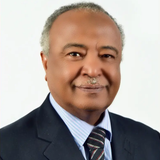
By Professor Mekki El ShiblyExecutive Director, Cognizance Centre for Strategic Studies
September/October 2025
A Politico-Constitutional Roadmap for Quartet Success in Sudan
Uniting Civilian Forces, Embedding Ceasefire, and Advancing Constitutional Transition
By Professor Mekki El ShiblyExecutive Director, Cognizance Center for Strategic Studies
I. Introduction
Sudan’s post-April 2023 landscape presents an exceptionally complex political and security crisis. The country faces dual de facto authorities, a grave military split between the Sudanese Armed Forces (SAF) and the Rapid Support Forces (RSF), and a fragmented civilian camp, particularly the weakening of the Forces of Freedom and Change (FFC) as the revolutionary custodian of the 2019 Constitutional Document.
The war has revealed the fragility of the previous arrangements. It underscores the urgent need for an updated constitutional framework to restart the transition, anchored in legitimacy, inclusivity, and enforceable guarantees that prevent repeating past failures. Equally, the war has exposed the destructive legacy of Sudan’s former Islamist regime, whose networks persistently undermined the December 2018 Revolution and its legitimate 2019 transition. These actors, as spoilers of democratic transformation, cannot constitute legitimate stakeholders in any renewed transition framework.
II. Objectives
This position paper aims to present a practical and legally consistent framework to guide the Quad’s support for Sudan’s transition after the war. Its objectives are:
- Separation of the Military and Civil Tracks: To ensure that ceasefire and security arrangements between the SAF and the RSF remain an exclusively military-security matter, while the civilian forces focus on the constitutional, political track.
- Constitutional Framework for Political Settlement: To reaffirm and update the 2019 Constitutional Document as the sole legitimate foundation for transition, amended jointly by its original signatories (SAF and FFC), in order to enable a legitimate transfer of power. Such amendments must also explicitly preclude the participation of Islamist remnants and counter-revolutionary actors in transitional structures, thereby safeguarding the integrity and inclusivity of the process.
- Integration of the RSF into the SAF: To define a dual-track approach for integrating the RSF into the SAF within a clear timetable, with transitional justice and unified command structures.
- Timeline for Unifying the FFC: To outline a sequenced and time-bound process for unifying the FFC as the indispensable civilian counterpart to the SAF in the constitutional amendment process.
By advancing these objectives, the paper seeks to chart a coherent pathway for a constitutional transfer of power from military to civilian authority, restoring legitimacy and stability through enforceable and inclusive arrangements.
III. Foundational Caveat: Separation of the Military and Civil Tracks
The civilian forces, foremost among them the FFC, stress that negotiations on ceasefire and humanitarian truces between the SAF and the RSF must remain an exclusively military–security matter, mediated regionally and internationally (by the Quad), without direct involvement of civilians.
This strict separation ensures:
- Preserving civilian independence from military bargains that they cannot enforce.
- Allowing the SAF and RSF to negotiate security arrangements without political complications.
- Enabling civilians to focus exclusively on the constitutional–political track once a ceasefire is in place, to rebuild legitimacy via amending the Constitutional Document and forming a civilian technocratic government.
IV. The Constitutional Framework for Political Settlement
The regularly amended 2019 Constitutional Document remains the sole legitimate foundation for rebuilding Sudan’s transition. Amendments must:
- Activate Article (24-3), which provisionally granted joint authority to the Sovereignty and Council of Ministers until the legislature is formed.
- Replace the failed “military–civilian partnership” with a new formula of civil–military coordination, limiting the SAF to a protective role over the constitutional order without direct political interference.
- Provide for a civilian government of independent technocrats tasked with managing the transition and completing state institutions (legislature, Constitutional Court, and security sector reform).
V. Integrating the RSF into the SAF
As one of the warring parties, the RSF’s integration into the settlement requires two parallel tracks:
- Military–Security Track: Direct negotiations with the SAF on ceasefire arrangements and restructuring, under Quad mediation.
- Constitutional–Political Track: Explicit provisions in the amended Constitutional Document to:
- Merge the RSF into the SAF within a defined timeframe and modalities.
- Ensure adherence to unified doctrine and national loyalty.
- Prohibit political or commercial involvement of military personnel.
- Establish transitional justice mechanisms addressing wartime human rights violations.
VI. Methodology and Timeline for Unifying the FFC
Hybrid Facilitation Architecture:
The unification of the FFC is the linchpin for a constitutional transfer of power from the military to civilians after the ceasefire. In view of the deep division, facilitating it requires careful sequencing, neutral conveners, and credible technical support. National think tanks can play a central, behind-the-scenes role in enabling FFC unification through technical facilitation, evidence-based proposals, capacity-building, and stakeholder mapping. Think tanks are neutral and domestic, lending credibility to the process while avoiding the perception of foreign interference. Central to this unification is a clear principle that excludes counter-revolutionary forces, foremost among them the remnants of the former Islamist order, whose involvement would compromise both unity and legitimacy.
The expanded Quartet (AU, UN, EU, US, and potentially UK, Norway, or regional partners) can complement national actors by providing legitimacy and guarantees, offering mediation support, and monitoring compliance. The Quartet’s role should be enabling and supportive, not directive. FFC’s unification must be a national initiative.
Phase One: Preparation (1 month)
- Public political declaration by FFC factions to begin unity efforts.
- Formation of a joint technical committee (15–20 members) to set an agenda.
- Written commitment that the outcome will be a unified political body representing the FFC before the SAF and the Quad.
Phase Two: Internal Dialogue (2 months)
- Three major workshops:
- Constitutional–Political Vision: Pathways to amend the Constitutional Document and broaden legitimacy.
- Civilian Government: Defining its form (independent technocrats, non-quota based).
- Relations with Armed Movements and Resistance Committees: Pathways for integration or coordination.
- Conclude with a mini-conference adopting an updated Unity Charter.
Phase Three: Unity Declaration (2 weeks)
- Signing of the “FFC Unity Charter” in a public event.
- Election of a transitional leadership mechanism (10–12 members) to represent civilians before the Quad and the SAF.
VII. Synchronization of uniting FFC with Quad’s Process
Timeline | Military–Security Track | Civilian–Constitutional Track |
Months 1–3 | SAF–RSF ceasefire talks under Quad mediation. | Launch FFC unity process (declaration and internal dialogue). |
Month 3 | Initial ceasefire or temporary truce. | FFC completes internal unity and establishes leadership. |
Month 4 | Start of RSF integration timetable. | Quad facilitates the launch of the constitutional amendment process (FFC and SAF). |
Months 5–6 | Ceasefire monitoring and redeployment. | Formation of a legitimate civilian technocratic government and completion of state institutions. |
VIII. Guarantees Required from the Quad
- Official recognition of the unified FFC as the sole civilian interlocutor in the constitutional track.
- Assurance that Quartet recognition is extended only to pro-democratic civilian forces, excluding Islamist spoilers and other actors responsible for obstructing the 2019 transition.
- Commitment by SAF and RSF to strictly separate the military and civilian tracks.
- International guarantees for implementation (UNSC, AU, Arab League, Troika).
- Conditioning international financial and humanitarian support on compliance with constitutional amendments and a genuine civilian transition.
IX. Conclusion and Recommendations
Sudan’s pathway to stability hinges on respecting the principle of separation between the military track (ceasefire and restructuring) and the civilian track (constitutional amendment and democratic transition).
The Quad should support:
- Military–only negotiations between SAF and RSF on ceasefire.
- FFC unification into one body within three months.
- Launch of constitutional amendment once ceasefire is secured.
- Formation of a legitimate civilian technocratic government within six months.
- Integration of the RSF into the SAF on a clear timetable.
This framework offers Sudan the opportunity to overcome the current deadlock and lay the foundation for a coherent democratic transition that restores unity, legitimacy, and stability, while maintaining domestic ownership and availing necessary regional and international oversight and guarantees.
melshibly@hotmail.com